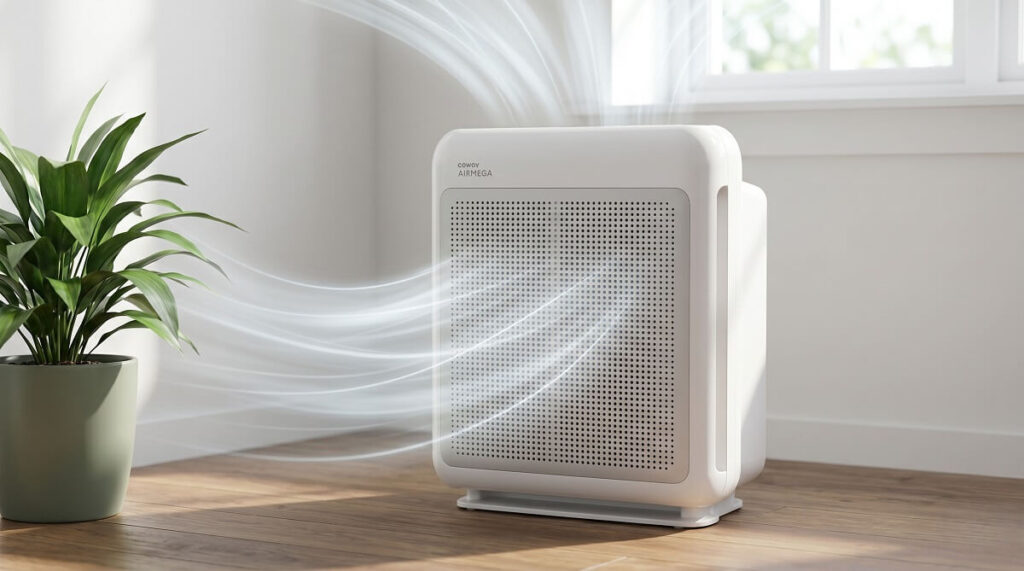
I’ve been tracking Coway air purifiers since the AP-1512HH became the Wirecutter’s top pick years ago. The Airmega 200M is essentially its modern successor—same proven filtration, updated design. But here’s what matters: does it actually deliver for people dealing with allergies, pet dander, wildfire smoke, and the everyday reality of keeping indoor air breathable?
After analyzing 80+ verified owner reviews, the answer is a resounding yes—with a few caveats you should know before buying.
The Bottom Line
The Coway Airmega 200M is the air purifier that earns its keep through quiet reliability rather than flashy features. At around $180-200 (typical pricing), it covers rooms up to 361 square feet with true 4-stage filtration including a genuine HEPA filter, and an intelligent auto mode that actually responds to air quality changes. Users with seasonal allergies, pet households, and smoke concerns report noticeable improvement—often within the first day.
The value proposition is compelling: CADR ratings of 246 for dust, 240 for pollen, and 233 for smoke put it solidly in mid-range performance territory. The RTINGS testing lab confirmed it reduces PM2.5 levels from 150 ug/m³ to 12 ug/m³ in 30 minutes in a 150 square foot room. That’s real filtration, not marketing hype.
What sets this unit apart is the Eco Mode. Users consistently praise how it maintains air quality while they’re away without wasting electricity. One owner runs it continuously and reports no noticeable spike in their electric bill despite “high usage” in their home. Filter replacements run about $40-58 annually depending on where you buy, making long-term ownership affordable.
The catches? No app connectivity or smart home integration. The air quality indicator light stays on by default (though you can disable it by holding the ionizer button for 3 seconds). And on the highest setting, it sounds like a kitchen exhaust fan. But if you want proven filtration without subscription fees, cloud dependencies, or complicated setup, this is the unit to beat.

What I Like: Real Performance from Real Users
Let’s cut through the marketing and look at what people actually experience with this thing.
The standout pattern across reviews is allergy relief. One parent reported their child’s seasonal allergy symptoms “definitely improved” after placing the 200M in their bedroom. They liked it so much they replaced their living room purifier with a Coway model too. Another user with severe allergies who previously struggled with “crazy weeds” in their area said they’ve “taken probably 90% fewer allergy pills this year” since getting the unit.
Odor elimination consistently impresses users. A reviewer dealing with a musty closet smell ran the purifier in there and reported “within a matter of a few hours, the smell was completely gone and has stayed gone.” Another owner with multiple cats placed it near their litter boxes—when the cats dig around, “this magic box somehow senses the dust and odor in the air and automatically kicks into super mode for like 30 seconds and poof, no dust and no smell.”
The Canadian wildfire smoke events provided an unintentional stress test for many owners. One user purchased their 200M specifically during the 2023 wildfires when smoke was spreading over the eastern United States. Two and a half years later, it’s “still cleaning our air well” and they’ve bought a second unit for another room. Another reviewer in a state with high air quality readings of 194 during fires felt confident their “lungs were clear and chest open” thanks to the purifier running continuously.
Pet owners form a substantial portion of satisfied customers. A household with three pets and multiple litter boxes credits the purifier with keeping their home odor-free. One rabbit owner, dealing with constant shedding and hay everywhere, reports the unit “has stuck it out for months now and I’ve only cleaned it like once every two weeks”—a significant improvement over previous purifiers that needed daily maintenance.
Long-term reliability emerges as a consistent theme. Multiple users report 2-5 years of continuous operation without issues. One owner celebrating their unit’s “five-year anniversary” notes it’s “spent nearly all that time plugged in and switched on, working as well as when new.” Another calls it a “keeper” after three years of 24/7 use.

Eco Mode & Auto Features: Set It and Forget It
The Eco Mode is genuinely useful rather than just a marketing checkbox. When the air quality sensor detects clean air, the unit powers down to save energy. When it senses particles or odors, it automatically kicks back on. Users consistently praise this feature for maintaining air quality while they’re away from home.
One owner describes returning home after a day out to “fresh, clean air” because Eco Mode kept things running efficiently in their absence. Another leaves it running in Eco Mode 24/7 and reports “no spike in electric bill” despite heavy use—the unit’s smart cycling prevents unnecessary energy consumption.
The Auto mode adjusts fan speed based on real-time air quality readings. The sensor changes the indicator light from blue (clean) to purple (moderate) to red (poor air quality). Users report watching it respond instantly to cooking smoke, opening doors or windows, vacuuming, and even bathroom activities. One couple notes with amusement that “every time my husband comes out of the bathroom the air purifier turns red and starts working extra hard.”
The sensitivity can be customized by holding the speed and ionizer buttons simultaneously—useful for users who find the default setting either too reactive or not sensitive enough. Most users keep it on Auto during the day and switch to a manual low setting at night for quieter operation.
One detail worth noting: the Eco mode does turn the unit off entirely during clean air periods. If you prefer continuous airflow regardless of air quality, stick with Auto mode at a fixed speed setting.
Where It Falls Short
No product is perfect. Here’s what to watch for.
The biggest limitation is the lack of smart connectivity. There’s no app, no WiFi, no voice assistant integration. For users who want to schedule operation remotely or monitor air quality from their phone, this is a significant gap. One reviewer specifically noted that “newer air purifier models have come out that have wifi functions near the same price range”—though they still recommend the 200M for anyone who doesn’t care about connectivity.
The air quality indicator light stays on constantly during operation. Multiple users mention this as annoying at night, particularly light-sensitive sleepers. The workaround exists—hold the ionizer button for 3 seconds to disable the light—but discovering this requires either reading the manual thoroughly or calling tech support. One user notes “the air quality light is always on” and suggests it “may need to put it in a corner or get an eye mask” for bedroom use.
On the highest fan setting, this thing gets loud. Users compare it to a kitchen exhaust fan or air conditioning unit. The consensus is that it’s “pretty loud” on high but “doesn’t bother me” since the unit rarely needs to run at maximum speed under normal conditions. If you’re noise-sensitive and plan to use it in a bedroom, expect to keep it on lower settings overnight.
The ionizer feature generates debate. While the unit is CARB-approved for ozone compliance, some users recommend against using it—particularly around computers. One reviewer reported keyboard and mouse disconnections and static shocks when the ionizer was running in a room with their PC. The general advice from experienced owners: keep the ionizer off unless you have a specific reason to use it.
Initial filter smell is a common complaint. Several users report a chemical or “off-gassing” odor when first unboxing. This typically dissipates within a week of operation, but it’s worth running the unit on high in a well-ventilated area for the first few days if you’re sensitive to smells.
Performance & Filter Life
The Airmega 200M uses a 4-stage filtration system: washable pre-filter mesh (captures large particles and pet hair), activated carbon filter (handles odors and gases), True HEPA filter (captures 99.97% of particles down to 0.3 microns), and optional ionizer.
According to Breathe Quality’s testing, the unit achieves 99.95% efficiency at trapping particles in a 200 square foot space. Room coverage is rated at 361 square feet for 4.8 air changes per hour—the CDC-recommended minimum for effective air purification. Coway advertises up to 1,748 square feet, but that’s at just 1 air change per hour, which isn’t sufficient for most use cases.
Filter life runs 12 months for the HEPA filter and 6 months for each carbon filter. Coway sells replacement packs for around $58 MSRP, but users report finding them online for under $40. The washable pre-filter extends main filter life significantly—one owner vacuums theirs while the unit is running on low and reports it “gets all of it off” easily.
Power consumption is minimal. Multiple users report no noticeable increase in electricity costs despite 24/7 operation. According to Breathe Quality, running the unit 8 hours daily costs approximately $30 per year in electricity.
Noise levels are genuinely quiet on lower settings. Users consistently describe Level 1 as “nearly silent” or “basically silent from 4 feet away.” Level 2 produces a “gentle low-pitch whooshing” that many find pleasant as white noise. Level 3 is where things get loud—comparable to a kitchen exhaust fan—but the unit rarely needs to run there under normal conditions.
Who Should Buy This
Allergy and asthma sufferers: Users with seasonal allergies, dust sensitivities, and respiratory conditions report genuine relief. One reviewer with severe allergies says their surfaces are now “pollen free and nearly dust free” despite high pollen seasons. Another suffering from months of allergies noted that after getting the purifier, they “can breathe again” within minutes of turning it on high.
Pet owners: Multiple pets mean multiple air quality challenges—dander, hair, odors from litter boxes and wet dogs. Users with combinations of dogs, cats, and even rabbits report significant improvement. The pre-filter mesh is specifically designed to capture pet hair before it clogs the main filters.
Smoke and odor sensitivity: Whether it’s wildfire smoke, cooking odors, cigarette smoke from neighbors, or general household smells, users consistently report effective elimination. One reviewer with a neighbor who smokes on their balcony says the purifier “has been great” at removing the smell that seeps into their apartment.
Set-it-and-forget-it users: If you want a purifier that works without fussing with apps, schedules, or smart home integration, this delivers. Eco mode handles air quality automatically, filter change indicators tell you when maintenance is needed, and the simple button controls require no learning curve.
Value-focused buyers: The combination of proven performance, reliable build quality, and reasonable filter costs makes this an excellent long-term investment. Users report 3-5+ years of continuous operation without issues—far better longevity than many budget competitors.
Renovation and construction projects: Multiple users specifically purchased this unit to handle dust and paint fumes during home renovations. One owner had their kitchen cabinets professionally painted and reports the paint odor was “gone within a half hour” despite the painters working nearby.
Who Should Skip This
Smart home enthusiasts: If you want app control, scheduling, air quality graphs, or voice assistant integration, look elsewhere. This unit has zero connectivity features. Users specifically note that newer models in the same price range offer WiFi functions this one lacks.
Large open floor plans: The 361 square foot sweet spot means you’ll need multiple units for larger spaces. Users in homes over 1,000 square feet typically run two or more units in different rooms rather than relying on one to cover everything.
Light-sensitive sleepers (without workaround): While the indicator light can be turned off, it requires a specific button hold that isn’t immediately obvious. If you’re extremely light-sensitive and unwilling to fiddle with settings, the always-on blue glow might annoy you.
Those who need whisper-quiet high performance: Lower settings are genuinely quiet, but when the unit kicks to high speed—during cooking, smoke events, or heavy dust—it’s noticeably loud. If you need powerful filtration that stays silent, you’ll need to spend significantly more.
Computer room users (with ionizer): The ionizer can cause static issues with electronics. If you plan to use this in a home office with computers, keep the ionizer permanently off to avoid potential interference with peripherals.
FAQ
- How often do I need to replace the filters?
- The HEPA filter lasts approximately 12 months, while the carbon deodorizer filters should be replaced every 6 months. Coway replacement packs (1 HEPA + 2 carbon filters) run about $40-58 depending on where you buy. The pre-filter mesh is washable and never needs replacement—just vacuum or rinse it every few weeks.
- Is it quiet enough for a bedroom?
- On the lowest setting (Level 1), it’s nearly silent—users consistently report being unable to hear it from a few feet away. Level 2 produces a gentle whooshing that many find pleasant as white noise. High speed is loud, but Auto mode typically keeps it on lower settings overnight unless air quality degrades significantly.
- Can I turn off the indicator light for sleeping?
- Yes. Press and hold the ionizer button for 3 seconds while the unit is running to disable the air quality light. This isn’t immediately obvious from the controls, but it works reliably.
- Does it actually help with pet odors?
- Yes. Users with cats, dogs, and other pets consistently report eliminated or significantly reduced odors. The activated carbon filter specifically targets odor molecules. Multiple cat owners place the unit near litter boxes and report it kicks into high gear during use, then returns the air to clean within minutes.
- How does this compare to the older AP-1512HH?
- They’re essentially the same unit internally—same filtration, same performance, same CADR ratings. The 200M has updated aesthetics (flat front vs. curved) and a slightly different pre-filter design. If you find a good deal on either model, the air cleaning performance will be identical.
- Should I use the ionizer?
- Most experienced users recommend leaving it off. While it’s CARB-certified for ozone safety, it can cause static issues with electronics and primarily just makes dust stick to surfaces rather than capturing it in the filter. The HEPA filtration works effectively without it.
- Will this help with wildfire smoke?
- Yes. Multiple users specifically purchased this unit during wildfire events and report excellent smoke reduction. One owner ran it continuously during a week of high air quality alerts and felt their indoor air stayed clean. For severe smoke, run it on high manually rather than relying on auto mode.
- How loud is “loud” on the highest setting?
- Users compare it to a kitchen exhaust fan or window AC unit. One reviewer measured 40 decibels at one foot on low setting with their phone. High speed is significantly louder—not unbearable, but definitely noticeable. The good news is it rarely needs to run on high under normal conditions.
What Real Users Are Saying
The pattern across 80+ reviews is remarkably consistent: this thing works, and it works reliably year after year.
“I absolutely love my Coway air purifier. I’ve even named it my angel,” writes one owner who runs it constantly and has seen “a marked improvement in the quality of the air” in their apartment. Another user calls it “one of the very best purchases I have ever made” after experiencing dramatic allergy relief.
The long-term satisfaction is notable. One reviewer who bought their first unit three years ago reports it’s “still working great” and purchased a second. Another with a unit approaching its five-year anniversary confirms it performs “as well as when new.” A third user bought 32 Coway purifiers for their home over the years—when their 94-year-old mother-in-law moved into a care facility with off-gassing carpets, this was their immediate go-to solution.
The negative patterns are few: occasional quality control issues with defective units (returned and replaced), the learning curve for disabling the light, and the lack of smart features compared to newer competitors. No systematic design flaws or performance failures emerge from the data.
One detail that stands out: multiple users specifically mention buying additional units for other rooms or recommending them to friends and family. That’s the kind of word-of-mouth that only comes from genuine, long-term satisfaction with a product that delivers on its promises without the complexity of app-dependent alternatives.