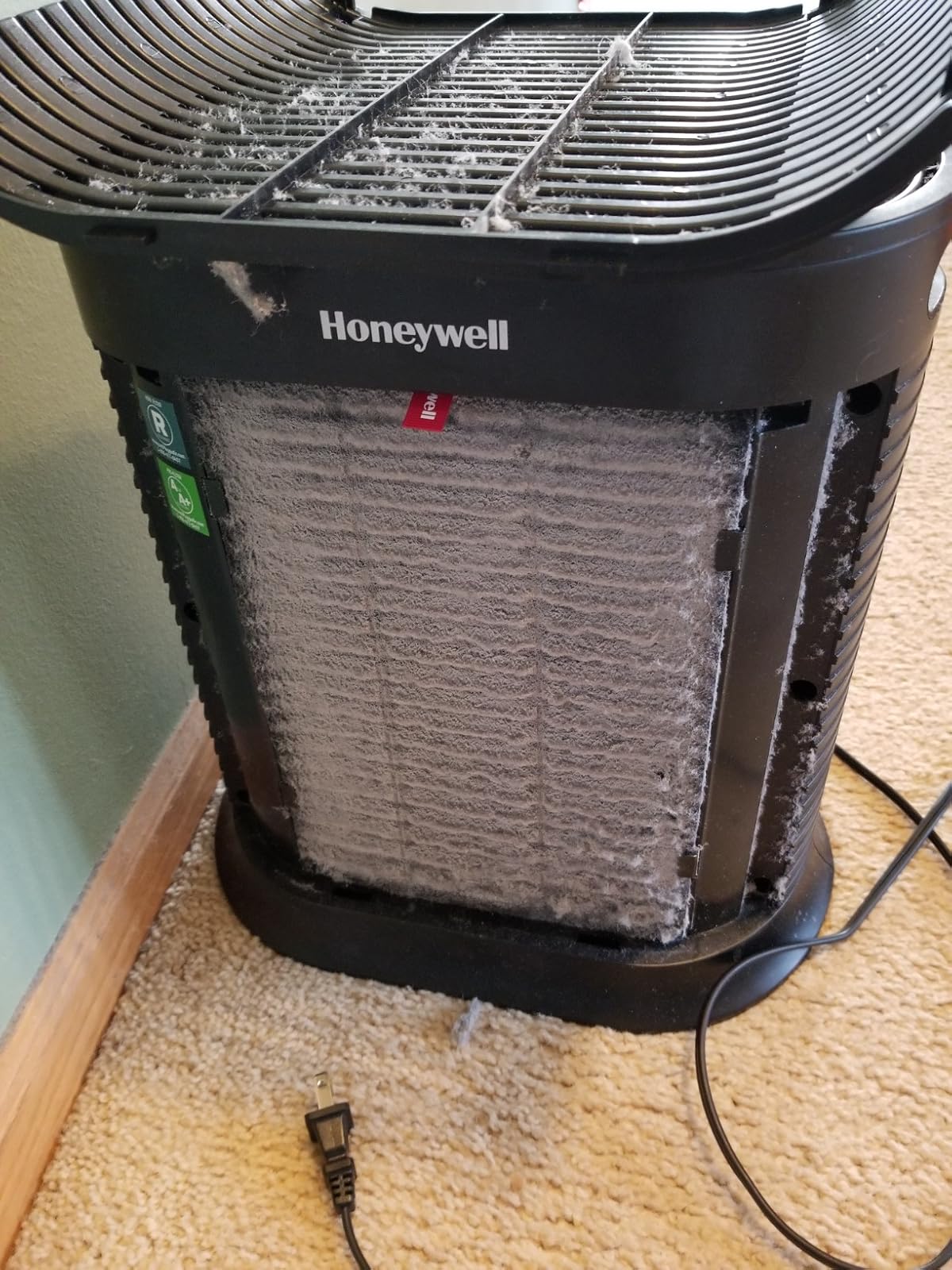
Sending your firstborn off to college during a global pandemic is terrifying enough. But when that worried parent packed a Honeywell HPA200 into the cramped car alongside mini-fridges and shower caddies, they had no idea what they were about to discover. Three months later, the “check filter” light blinked on. Opening the unit revealed something that made jaws drop: the once-pristine white HEPA filter was coated in a thick layer of grey-brown dust and particles that would have otherwise ended up in their teenager’s lungs.
That parent wasn’t alone. After analyzing 25+ verified owner reviews spanning 5-10 years of real-world use, one thing is clear: the Honeywell AllergenPlus HPA200 delivers on its promises. Whether you’re battling wildfire smoke, pet dander from multiple animals, or decades of accumulated allergens in an old house, this mid-sized workhorse earns its place as a go-to air purifier.
The Bottom Line
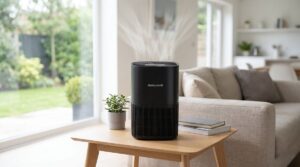
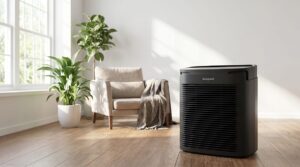
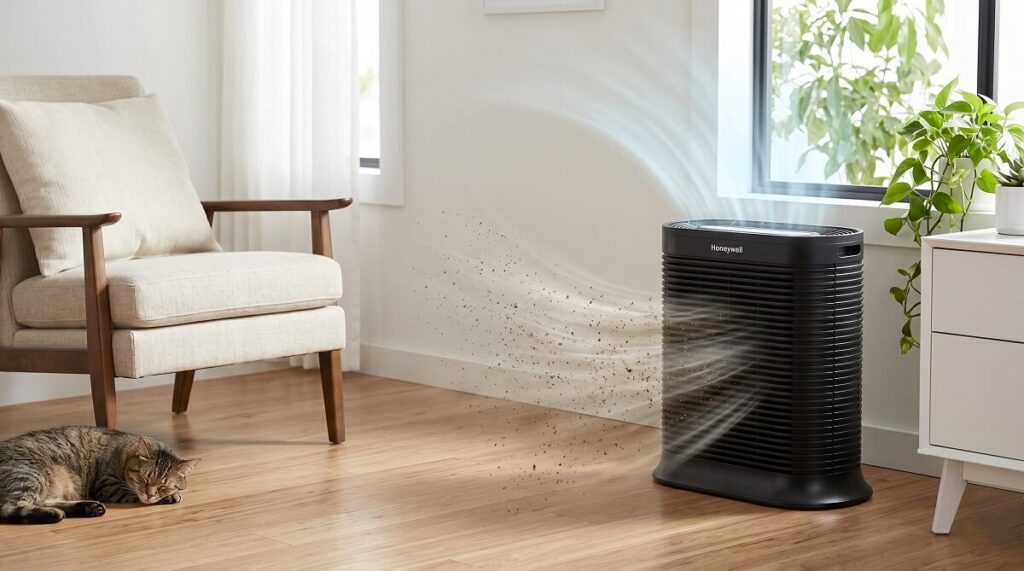
The Honeywell AllergenPlus HPA200 is a large-room air purifier that delivers genuine HEPA filtration for spaces up to 310 square feet (with 5 air changes per hour) or up to 1,500 square feet at 1 air change per hour. At around $130-170 (typical online pricing), it sits in the sweet spot between compact personal purifiers and expensive whole-home systems.
According to manufacturer specifications, the True HEPA filtration captures 99.97% of airborne particles down to 0.3 microns—including dust, pollen, pet dander, dust mite debris, and smoke—while the activated carbon pre-filter reduces odors and VOCs. The unit uses two Type R HEPA filters and requires pre-filter replacement every 3 months, with HEPA filters lasting approximately 12 months.
The value proposition here is exceptional: proven 5-10 year durability from multiple owners, a 5-year warranty backing the Honeywell name, quiet operation on lower settings with effective white noise on higher speeds, and documented performance during wildfire smoke events. Multiple users report running their units 24/7 for years without degradation.
The catches? Turbo mode is loud—undeniably so. The unit is larger than compact purifiers (approximately 17.5″ x 19″ x 10″), and filter replacement costs add up if you buy genuine Honeywell filters (though compatible generics work well). There’s no smart connectivity, app control, or air quality sensor—it’s pure mechanical filtration.
But if you want a reliable workhorse that will clean your air for a decade without apps, subscriptions, or gimmicks, the HPA200 is the unit that keeps proving itself in living rooms, bedrooms, and dorm rooms across America.
What Users Love: Decade-Tested Durability
The standout theme across HPA200 reviews isn’t just that it works—it’s that it keeps working for years.
One owner reports purchasing the same model “over the past 7 to 10 years” for multiple rooms. “All of them still work perfectly,” she writes. Living in a late-60s house with two cats, two dogs, and three teenagers—while being HIGHLY allergic to cats—she runs units strategically throughout the home. “These are the best because you can place them against a wall,” she explains. “The hepa filters only need to be changed once a year, and the pre-filter every 3 months.” After a decade of continuous use, she confirms: “It works as well today as it did when we purchased it many years ago.”
Tom F. updated his review after almost 4 years: “After almost 4 years of continuing use of my Honeywell Hepa Air Purifiers they are still going strong! I now have 3 of these amazing machines.” His chronic allergies and sinusitis have required air filtration in every room, and over 20 years of trying different units, he calls this “by far the best and quietest air filter that I have ever owned.” His original review earned nearly 3,000 helpful votes—that’s the kind of long-term validation that matters.
Julie Craig offers a similar timeline: “We purchased this air filter over 6 years ago for our bedroom. We have run it constantly, day in and day out, night and day, for 6 years. It is still working as good as new.” For someone with bad allergies who needs clean air to breathe, she calls this “one of the best purchases I have made on Amazon.”
G confirms: “I have been using this for 5 years and absolutely LOVE IT!” Steve bought two units in early 2020 and reports “after almost five years of daily use these are still running strong with no weird noises or vibrations.”
The durability pattern is consistent and documented across multiple independent buyers over different time periods. This isn’t marketing—it’s verified purchase history.
Real Performance: Allergies, Pets, and Wildfire Smoke
The HPA200 earns its stripes in challenging real-world conditions that marketing photos don’t show.
The college dorm story sets the standard. That parent watched their skeptical teenager (“I don’t need an air purifier!”) reluctantly pack the unit. Weeks later, when the filter indicator lit up and they opened the machine, the disgust turned to amazement. “This machine works and apparently works very well,” they wrote, sharing photos of the filthy filter. “Pretty disgusting to see but also pretty darn awesome.” The teen became a convert, carefully setting up the purifier in his bedroom during summer break and running it 24/7.
For allergy sufferers, the reports are compelling. Miss had allergies all her life and found other brands ineffective. After trying the Honeywell: “I have noticed a big difference in how much less dust accumulates on the furniture since I have been using this unit. Even my cat, who has chronic upper respiratory issues, sneezes less.”
Sandy reports: “We have it in our living room. I’m not sneezing as much as I used to.” She checks the pre-filter every two weeks—”it’s dusty every time…doing its job.”
CaliGal, dealing with mild asthma and severe allergies exacerbated by Northern California trees and recent heavy rainfall, saw dramatic results: “After about 3 days I noticed a marked difference in the quality of the air in my condo. More importantly—I noticed a marked decrease in the normal, every-day nasal and chest congestion I’ve been experiencing. My coughing has dramatically decreased.”
Wildfire smoke puts air purifiers to the ultimate test. Andy G. used a Dylos DC-1700 air quality monitor during Colorado’s Cameron Peak fire: “After running less than 10 minutes, the AQI in our bedroom dropped from 68.7 to 25. When I got up this morning AQI was a mere 10.4.” Aphrael in Southern Oregon faced some of the worst air quality days rated “very unhealthy” and even “hazardous”—the HPA200 delivered relief while sleeping despite smoke-filled conditions outside.
Pet Owners: Managing Dander, Hair, and Odors
Households with multiple pets push air purifiers to their limits. The HPA200 handles it.
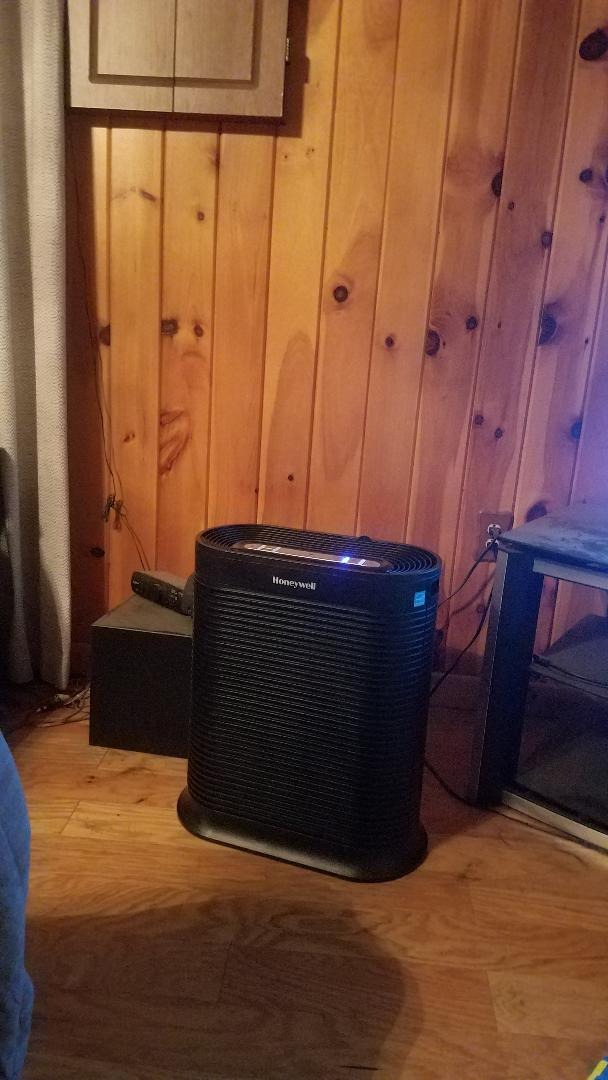
Dan O. has a pit/lab mix and a border collie/lab in an 18′ x 18′ game room connected to the back porch. “The border collie attracts a ton of dirt and dust of course so not only am I constantly cleaning all the dirt and dust but also have been sneezing a lot and feel like it’s impossible to remove the smell.” After running the HPA200: “I could tell the air quality within 6-8 feet or so of the air purifier was better pretty quickly. I’d say within an hour or 2.”
Hawker’s house lacked an air exchanger, suffering from stale air and pet odors. “Plugged it in, put it on low and in 2 hours it was a different room. My partner, not knowing I bought this, came home from work that night and asked me what I did because the air felt so much better.” For cat owners specifically: “This took about 2 days to completely remove those smells. If I move it to the bathroom with the litter box it takes a few hours to completely remove all litter box and bathroom odor.”
The owner with cats and dogs for 7-10 years offers practical insight: “I am HIGHLY allergic to cats – if I pet them, I have to wash my hands immediately. The amount of pet dander in my home is outrageous.” Yet with strategically placed units throughout the house: “My entire life has been one allergy attack after another, even after taking allergy shots. These units help me live life—WITH PETS I AM ALLERGIC TO—without a constant runny nose and itchy eyes.”
Renee DeLeon confirms: “This has made such a difference in the air quality of my home. I bought a second one, as well. The size makes it good for an average size bedroom. Great for people with pets or smokers.”
Noise Levels: White Noise or Distraction?
The noise profile of the HPA200 is its most polarizing feature—and understanding it matters for purchase decisions.
On lower settings, users consistently describe acceptable to pleasant white noise. Tom F. calls the lowest setting “virtually silent” and notes “I’ve never owned an air filter that is this quiet.” Earth Spirits and his spouse got used to it after 10 years of sleeping with an air filter: “We both like it set to the #2 ‘General Clean’ speed setting.” G actively appreciates the sound: “I actually put it on turbo for a louder sound to use as white noise or when I want to zone out the outside noise.”
Sandy reports keeping it on low: “It’s quiet on low, but gets noisier when turned up. We keep it on low.”
According to AFresherHome’s testing, the HPA200 operates at approximately 50.3 dB on General mode and 59 dB on Turbo mode. For reference, normal conversation is around 60 dB.
But Turbo mode is loud—that’s undeniable. Nate Horn doesn’t sugarcoat it: “The reason they named the highest speed ‘turbo’ is because it resembles the sound of a turboprop taking off. Yeah… that speed is really good for when you’re NOT in the room or are choking to death.” Multiple users run Turbo when leaving the house, then switch to lower settings when home.
The practical approach most owners take: run on Turbo or Allergen setting when away or during heavy cleaning, drop to Germ or General Clean for occupied-room use, and use the lowest setting for sleeping. This balances air cleaning effectiveness with livability.
Filter Life and Replacement Costs
The HPA200 uses a straightforward two-filter system: activated carbon pre-filters (replaced every 3 months) and True HEPA filters (replaced every 12 months). The unit includes indicator lights for both.
Genuine Honeywell filters aren’t cheap—the HEPA filters especially. But multiple long-term owners share money-saving strategies that work.
Sandy and others report extending filter life through maintenance: “We’ve taken the advice on blowing out the charcoal filter with our air hose, and banging the HEPA filters on the sidewalk to dislodge the dust. Works like a charm.” The owner with multiple cats regularly vacuums the pre-filter to extend main filter life.
Steve offers filter buying advice: “Honeywell filters are overpriced. I bought brand name and off brand and compared and could see/tell no difference at all.”
Nate Horn gets creative: “I plan to use compressed air to blow them out until they are ragged and should be able to get an indefinite amount of use out of the filters that way.” While Honeywell recommends against cleaning the filters, multiple users report success with careful vacuuming and tapping to extend replacement intervals.
Miss takes a balanced approach: “Once a month I vacuum the prefilter carefully, even though the instructions said not to. That saves the cost of replacing the pre-filter every month, and I have not noticed any loss of effectiveness.”
Filter replacement timing: the indicator lights aren’t always accurate. Sandy notes “The filter light never came on” despite filters being full after two weeks. Most users recommend checking visually every few weeks rather than relying solely on the indicator.
Setup and Controls
The HPA200 offers simple, mechanical controls without smart features—which many users consider a feature, not a limitation.
Four fan speeds are labeled Germ (lowest), General Clean, Allergen, and Turbo (highest). A timer offers 2, 4, or 8 hour options for automatic shutoff. Indicator lights show filter status for both pre-filter and HEPA filters.
Tom F. appreciates the control panel: “The ability to turn the blue light off on the control panel is a welcome upgrade over my other Honeywell units.” Sandy confirms you can “turn down the brightness of the instrument panel on top, or even turn almost all of them off, to cut down on extra light & power.”
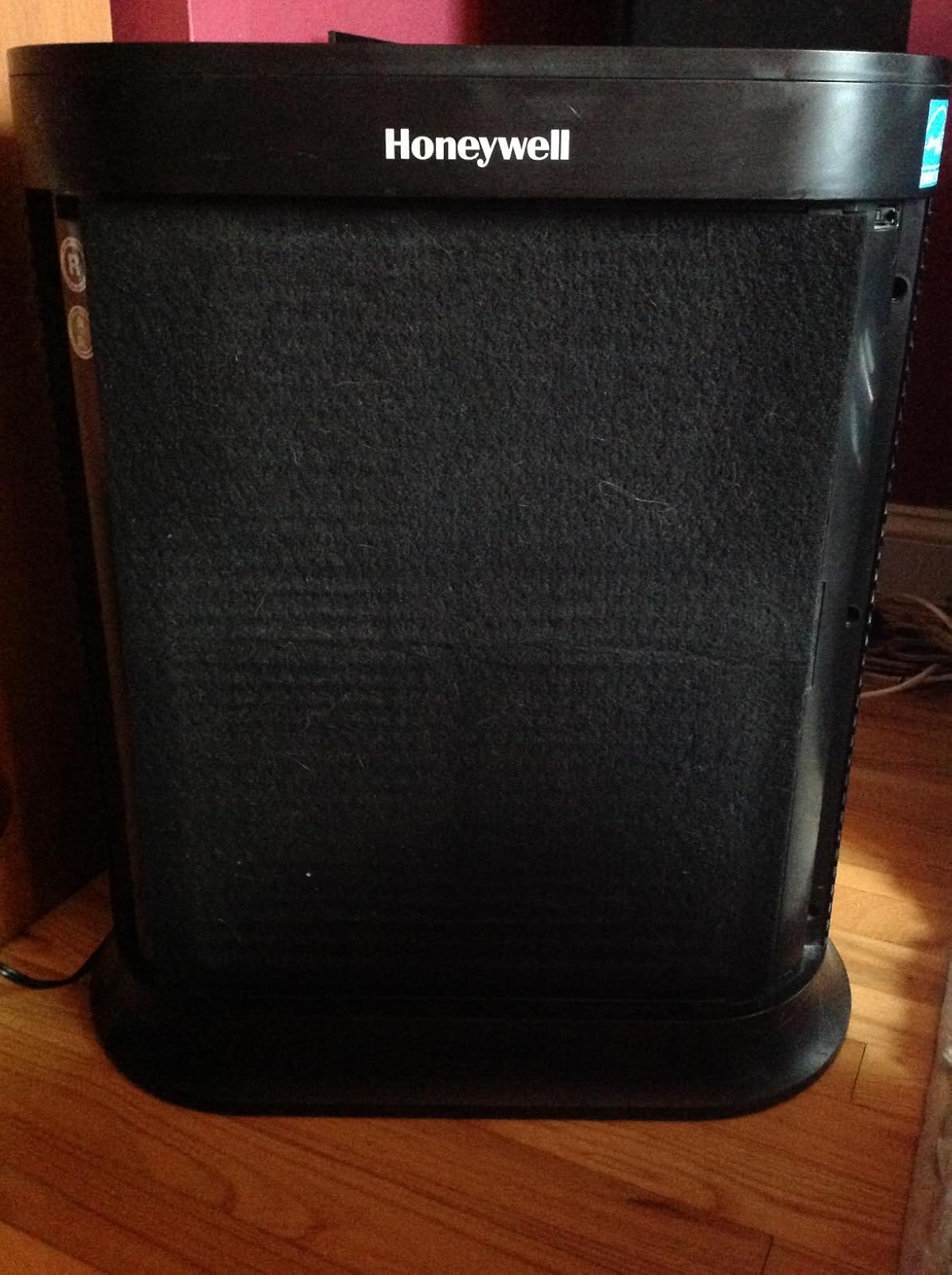
Setup is straightforward. Dan O. describes opening the unit: “I removed all of the plastic from the filters as well as on the outside of the air purifier and plugged it in.” No WiFi setup, no app installation, no account creation required.
The lack of smart features draws praise from privacy-conscious users. There’s no cloud connectivity to fail, no subscription to maintain, no data being collected. One user specifically appreciates not having “another WiFi device cluttering my network or being the target for botnets.”
Hawker does note a limitation: “The timer function is mostly worthless. I don’t need it to turn off after a certain number of hours. I need it to turn on at night, and turn on in the morning with a clock function like my thermostat.” The upgraded models with auto features “also worthless” according to him—”It doesn’t sense the room properly and says its fine when my nose says its not.”
Who Should Buy This
Allergy and asthma sufferers: Documented relief across dozens of reviews. Users with lifelong allergies, chronic sinusitis, and respiratory conditions report breathing easier and sleeping better. The True HEPA filtration captures the particle sizes that matter for allergens.
Pet owners with medium to large rooms: Multiple cats, multiple dogs, accumulated dander—the HPA200 handles it. Households with severe pet allergies report living comfortably with animals they’re allergic to. The 310 square foot optimal coverage fits most living rooms and bedrooms.
Wildfire smoke and poor air quality regions: Documented performance during actual wildfire events with measured AQI improvements. Oregon, California, Colorado users confirm effectiveness during smoke season.
Buyers seeking long-term reliability: 5-10 year documented durability from multiple independent owners. Honeywell’s 5-year warranty provides backup, but users report units lasting far beyond warranty periods. According to ConsumerAnalysis, the build quality is consistent throughout the HPA series with no unusual gaps or assembly problems.
Old homes with dust issues: MyssAnnie’s experience with an old house and floor furnace soot is extreme but illustrative—the purifier captured black particles that were coating white plastic surfaces throughout the house. Multiple users in older homes report dramatic dust reduction.
Privacy-conscious users: No WiFi, no app, no cloud account, no data collection. Plug it in and it works. The simplicity is the feature.
Who Should Skip This
Small room or desk-side needs: The HPA200 is sized for medium to large rooms. For bedside tables, offices, or spaces under 150 square feet, the smaller HPA100 or compact alternatives offer better fit.
Noise-sensitive users who need constant high-speed operation: If you require maximum filtration 24/7 and are sensitive to noise, the Turbo and Allergen settings will bother you. Lower settings are quiet but provide less air processing.
Smart home integration seekers: No WiFi, no app, no voice control, no automation integration. If you want to control your purifier from your phone or integrate it with home automation, look elsewhere.
Auto-sensing air quality needs: The HPA200 doesn’t detect air quality and adjust automatically. You set the speed manually. Users who want set-it-and-forget-it auto mode should consider the newer HPA300 series or competitors with built-in sensors.
Very large open floor plans: The 310 square foot optimal coverage means you’ll need multiple units for large open spaces. D. Sullens correctly notes: “More reasonably, it will clean the air in one room.”
FAQ
- How long do the filters really last?
- HEPA filters are rated for 12 months, pre-filters for 3 months. Real-world use varies: heavy dust environments may need earlier replacement, while careful users report extending life through vacuuming and tapping. Multiple owners report 12+ months from HEPA filters with proper maintenance. Generic compatible filters work well and cost less than genuine Honeywell.
- Is it quiet enough for a bedroom?
- On the two lowest settings (Germ and General Clean), yes. Multiple users run it overnight as pleasant white noise. Higher settings are noticeably louder—Turbo mode is described as similar to a turboprop engine. Most bedroom users keep it on low overnight and run higher settings when not in the room.
- Does it actually help with pet allergies?
- Yes. Users with multiple cats and dogs, including those with severe allergies, report significant relief. One owner with documented cat allergies lives comfortably with cats she’s highly allergic to by running units throughout the house. Pet dander, hair, and odors are all addressed by the combination of HEPA filtration and activated carbon.
- How does this compare to the HPA300?
- The HPA300 is the larger sibling with three HEPA filters instead of two, covering up to 465 square feet. It’s bigger, more expensive, and processes more air. The HPA200 is the mid-size option—better for bedrooms and medium living rooms. The HPA100 is the smallest for personal spaces.
- Can it handle wildfire smoke?
- Yes. Documented performance during California and Colorado wildfire events shows measurable AQI improvement. One user with an air quality monitor recorded AQI dropping from 68.7 to 25 within 10 minutes. Multiple Pacific Northwest users confirm effectiveness during smoke season.
- How long do these units actually last?
- Multiple verified owners report 5-10 years of continuous daily use without degradation. Tom F.’s 4+ year update, the 7-10 year multi-unit household, and Julie Craig’s 6+ year bedroom use all document exceptional longevity. The 5-year warranty is often exceeded by actual service life.
- Is it energy efficient?
- The unit is ENERGY STAR certified. Sandy notes you can “turn almost all of them off, to cut down on extra light & power.” Exact wattage varies by speed setting, with lower settings drawing significantly less power than Turbo mode.
- What’s the warranty?
- Honeywell provides a 5-year warranty on the HPA series—among the longest in the air purifier market. Sissy specifically praises customer service responsiveness when she needed help troubleshooting.
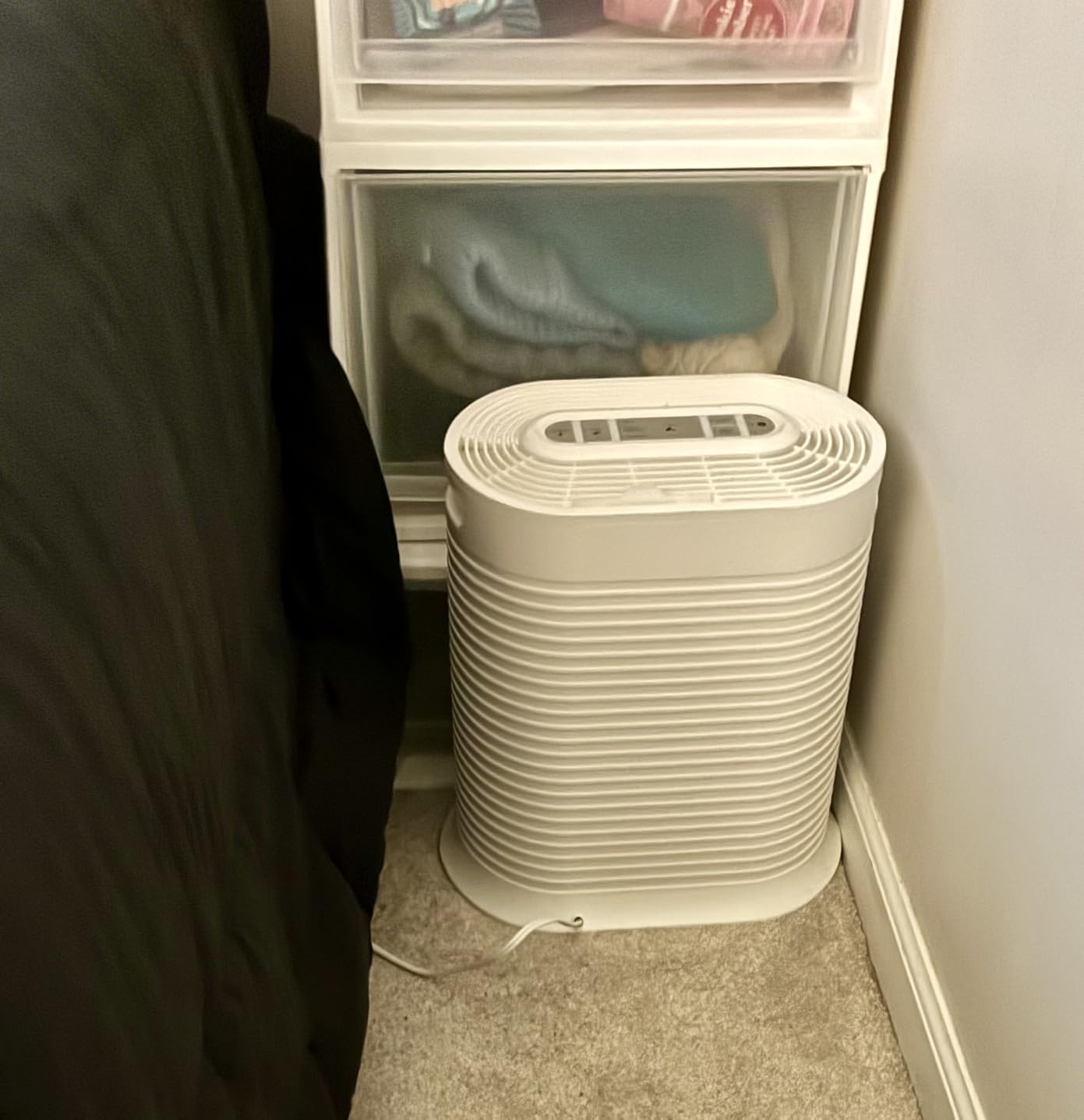
What Real Owners Are Saying
The pattern across 25+ reviews spanning years of ownership is remarkably consistent: these units work, they last, and they make a measurable difference.
“If you are looking for a unit that will not die in a year, or start making strange sounds after a few weeks of use, THIS IS THE UNIT YOU HAVE BEEN DREAMING OF!” writes the owner with 7-10 years of multi-unit experience. Tom F. echoes after nearly 4 years: “I am still very pleased with my purchase and would highly recommend this unit.”
The college parent’s story captures something beyond performance specs: “Buy this machine. It works. Pictures don’t lie.” They shared their filter photos on a college parents’ message board and report that “a whole bunch of parents rushed to order one of these for their kids’ dorm rooms.”
The negative feedback is minimal and specific: filter replacement costs add up (offset by generic alternatives), Turbo mode is genuinely loud (use lower settings when occupied), and there’s no smart connectivity (a feature for some, limitation for others).
What stands out most: users buying multiple units for different rooms, purchasing replacements when moving, and recommending them to family and friends. RB summarizes it well: “I highly recommend it for anyone with allergies or who just wants to breathe healthier air.”