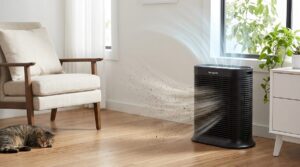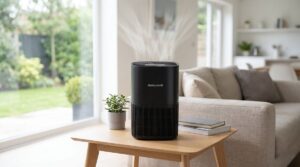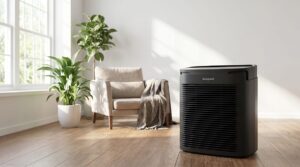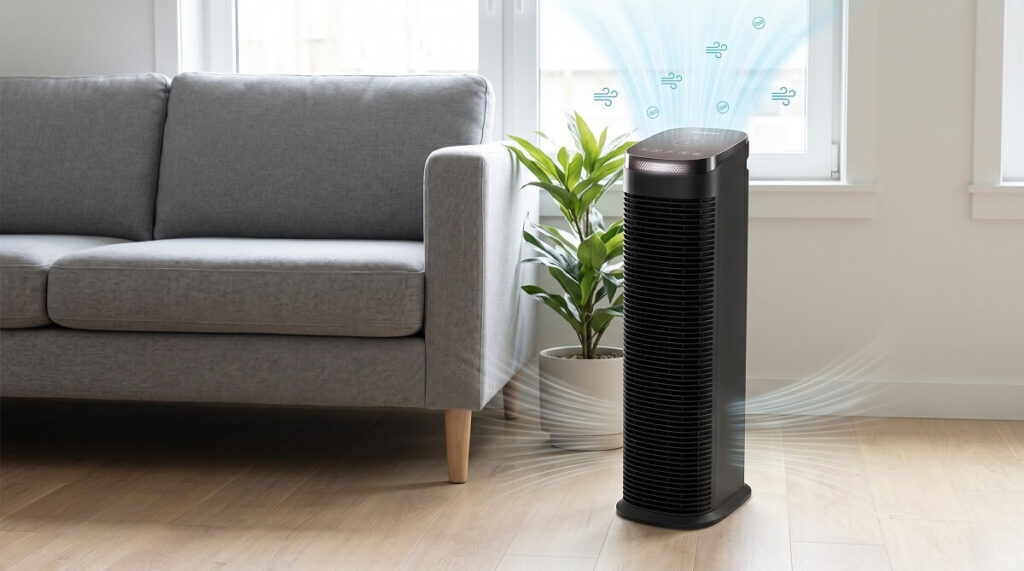
Wildfire season in Northern California. The air quality index reads “hazardous,” and my neighbor’s freshly-mowed lawn dust is somehow finding its way into my supposedly sealed 1,600 square foot home. That’s when I started digging into what actual owners think about the Honeywell Insight HPA180—a tower-style air purifier that promises True HEPA filtration with real-time air quality monitoring.
The verdict from dozens of verified purchasers? It delivers where it matters most: clean air you can actually feel, especially for pet owners, allergy sufferers, and yes, even smokers who need their garage office to smell like something other than an ashtray.
The Bottom Line
The Honeywell Insight HPA180 is a trusted mid-range tower air purifier that earns its reputation through consistent real-world performance. According to Breathe Quality, the unit delivers CADR ratings of 128 (dust), 132 (smoke), and 151 (pollen) cfm—solid numbers that translate to 5 air changes per hour in rooms up to 200 square feet. Users consistently report noticeable improvement in air quality within hours of setup.
At an MSRP of $189 (frequently discounted to around $139), the HPA180 occupies a competitive sweet spot: genuine True HEPA filtration that captures 99.97% of particles down to 0.3 microns, an intelligent air quality sensor with color-coded feedback, four cleaning levels including Turbo and Auto modes, and Honeywell’s 5-year warranty backing it up. The Energy Star certification and 55-watt power consumption mean running it 24/7 won’t shock your electricity bill.
The drawbacks? Some users find it not quite quiet enough for bedroom use unless positioned away from the bed. The tower design means the cord exits from the filter side rather than the back—an annoyance if you’re placing it against a wall with controls facing outward. And while Honeywell is a trusted brand with readily available filters, those replacement filters (around $45 annually) are a recurring cost you’ll need to budget for.
But for classrooms, living rooms, home offices, and especially smoke-prone spaces, owners consistently report this purifier does exactly what it promises.
What I Like: Performance That Users Can Actually Feel
The most compelling endorsements come from users solving specific air quality problems—not just buying a purifier for general wellness.
One smoker running the HPA180 in their garage office reports it “makes a difference in the air quality” that’s immediately noticeable. They specifically praise how quiet it runs during normal operation and how easy setup was—plugged in and working within minutes. For anyone who’s tried to rehabilitate a smoke-contaminated space, that kind of instant impact is exactly what you’re looking for.
A family in a wildfire-prone area purchased the HPA180 specifically for dangerous air quality days. Their 1,600 square foot home gets coverage by moving the lightweight unit between living areas during the day and the bedroom at night. The portable design (tower-style, not bulky console) makes this practical in a way that larger units don’t allow. They immediately felt the difference in air quality and specifically appreciated the dimmable control panel for nighttime use—a small detail that matters when you’re trying to sleep while filtering hazardous outdoor air.
Pet owners report excellent results. One user with an open floor plan runs the HPA180 on auto mode continuously, and after months of use confirms it controls dust, pet hair, and pet smell effectively. The auto mode responds to air quality changes without constant manual adjustment—set it and forget it actually works here.
Teachers are using these in classrooms with positive results. The coverage handles typical classroom square footage, and the auto mode means students aren’t distracted by constant fan noise changes. One educator simply notes it “works well to purify the air in my classroom”—exactly the kind of boring, reliable performance you want from infrastructure.
Multiple users describe dramatic improvements in their breathing and sleep quality. One owner who bought it as a Christmas gift calls it a success. Another says it “helps me to sleep and breathe better”—the fundamental promise of any air purifier, delivered.
The Air Quality Sensor: Real-Time Feedback That Works
The Intelligent Air Quality Sensor is the HPA180’s distinguishing feature, and users consistently validate that it actually responds to environmental changes—not just decorative lights.
One owner was initially skeptical when the indicator stayed green constantly. Then they started cooking—the light turned red. “It tells me it is getting rid of smells,” they concluded. That real-time feedback transforms the purifier from a passive appliance into something you can actually observe working.
The color-coded display system (green for clean, progressing to red for poor air quality) gives immediate visual confirmation without checking an app or guessing. Users in dusty rural environments report the sensor accurately reflects conditions—green when windows are closed and the house is settled, shifting when activity stirs up particles.
The Auto mode ties directly to this sensor, ramping fan speed up when air quality degrades and dropping back to quieter operation when the air clears. For users who don’t want to manually adjust settings constantly, this automation actually delivers on its promise. One long-term owner initially doubted the purifier’s effectiveness, then changed their mind after months of use: “I’ve changed my mind after having it for months. This along with an auto vacuum is controlling dust, pet hair and pet smell.”
Where It Falls Short
Honeywell markets this as quiet, but “quiet” is relative—and some users disagree with that characterization.
One owner specifically purchased the HPA180 because the description promised quiet operation, but found it “not quite” quiet enough for sleeping, even on the lowest speed. They note their other Honeywell air purifier is quieter, suggesting this model’s tower design may create more airflow noise than console alternatives. If you’re particularly noise-sensitive and need bedroom-level silence, test before committing or position it farther from your bed.
The noise issue gets more pronounced at higher settings. Medium to high speeds are “pretty loud” according to one user who otherwise loves the unit’s performance. They tolerate it as white noise, but note their partner finds it annoying. If you live with someone noise-sensitive, this could be a household negotiation.
The cord placement is an unexpected design annoyance. On the HPA180, the power cord exits from the filter side rather than the back like Honeywell’s larger console models. One user who wanted to place it between a bookcase and wall—with the filter side facing foot traffic where pets walk by—found the controls and ambient light facing the wall instead. “Seems as though this was designed to be placed in the middle of the room,” they observed. If your placement requires filter-side-out positioning, you’ll need to work around this.
Some users wish for features the HPA180 doesn’t offer: remote control, Bluetooth connectivity, and washable/reusable filters. These are fair criticisms in 2026 when competing brands offer app connectivity and smart home integration. Honeywell keeps this unit simple—manual controls only, no wifi features—which is either a limitation or a benefit depending on your preferences.
One user reported receiving a unit with blocked airways—a quality control issue rather than a design flaw. They noted, “I left my home, and returned to this product with no air-way passage.” Inspect your unit upon arrival and test immediately while within the return window.
Filter System and Ongoing Costs
The HPA180 uses Honeywell’s proven three-stage filtration: a pre-filter with activated carbon, an optional enhanced carbon filter (available in formulations targeting smoke, odors, or VOCs), and the True HEPA filter that does the heavy particulate lifting.
According to Honeywell’s official specifications, the pre-filter (A or A+) should be replaced every 3 months, while the HEPA filter (G) lasts approximately 12 months under normal use. Replacement filter sets run approximately $45, making annual operating costs reasonable compared to some competitors.
One long-term owner learned this lesson the hard way: their unit stopped working, they thought it was the filters, ordered $27 G filters, replaced them—and the unit still had issues. They ended up with usable filters but a non-functional purifier, eventually suspecting an electrical problem rather than filter-related failure. The lesson: if your unit acts up, troubleshoot before assuming filters are the culprit.
Users consistently praise Honeywell’s filter availability—a real concern when buying air purifiers from less-established brands. One owner specifically chose Honeywell after getting “burned by purchasing an air purifier endorsed on GMA” that worked fine until filters became unavailable. “Honeywell has been a tried and true product,” they note. Brand longevity matters when you’re committing to ongoing filter purchases.
Performance Specs: How It Measures Up
Based on independent testing by Breathe Quality, here’s what the HPA180 delivers:
| Specification | HPA180 Performance |
|---|---|
| CADR (Dust/Smoke/Pollen) | 128 / 132 / 151 cfm |
| Room Coverage (AHAM Verified) | 200 sq ft |
| Effective Coverage | Up to 300 sq ft |
| Air Changes Per Hour | 5x in rated space |
| Noise Level | 29 dB (low) to 54 dB (high) |
| Power Consumption | 55 watts |
| Certification | Energy Star, AHAM Verified |
| Warranty | 5 years |
The CADR numbers position the HPA180 competitively against similar-priced units like the Levoit Core 300S and Winix 5500-2. The 5-year warranty exceeds many competitors’ 2-3 year coverage—a confidence indicator from Honeywell and valuable protection for buyers.
Who Should Buy This
Smokers needing a dedicated space purifier: Multiple users running the HPA180 in garages, home offices, and designated smoking areas report measurable improvement. The carbon pre-filter targets odors while the HEPA handles particulates.
Allergy and respiratory sufferers: Users report breathing easier, sleeping better, and experiencing fewer symptoms. One owner with COPD-related breathing concerns uses Honeywell purifiers as essential medical equipment, not optional accessories.
Pet owners in medium-sized spaces: The combination of dust, dander, and odor control works for households with dogs and cats. The auto mode adjusts to fluctuating air quality as pets move around and shed throughout the day.
Wildfire zone residents: The portable tower design allows moving between rooms as needed, and the True HEPA filtration captures smoke particles effectively. Users in fire-prone areas specifically purchased this for hazardous air quality days.
Teachers and office workers: Classroom and office deployments work well—adequate coverage for typical room sizes, auto mode that doesn’t require constant attention, and a trusted brand that won’t raise IT security concerns.
Buyers who value brand reliability: Honeywell’s long market presence means filters will remain available for years. Users burned by discontinued products from smaller brands appreciate this stability.
Who Should Skip This
Light sleepers who need bedroom silence: Even on the lowest setting, some users find it too loud for sleeping. If you’re noise-sensitive, consider Honeywell’s quieter console models or test before committing.
Smart home enthusiasts: No wifi, no app, no voice assistant integration. If you want scheduling, remote monitoring, or automation beyond the built-in auto mode, look at competitors like Levoit or Coway with smart features.
Large open floor plan homes: The 200-300 square foot effective coverage means you’ll need multiple units for larger spaces. Calculate your actual room sizes before purchasing.
Budget-constrained buyers with ongoing cost concerns: While the unit price is reasonable, the $45+ annual filter replacement adds up. If filter costs are a significant concern, research units with longer-lasting or washable filters.
Buyers who need wall-flush placement: The cord placement on the filter side creates awkward installation if you want the filter facing outward while the unit sits against a wall. Measure your space and consider cord routing before purchasing.
FAQ
- How loud is the Honeywell HPA180 really?
- At the lowest setting, it runs around 29 dB—comparable to a whisper. However, some users still find this too loud for bedroom sleeping, especially if they’re noise-sensitive. At higher speeds, it reaches 54 dB, which multiple users describe as “pretty loud” but tolerable as white noise. Position it away from your bed if using overnight.
- How often do I need to replace the filters?
- Honeywell recommends replacing the pre-filter every 3 months and the HEPA filter every 12 months. Actual replacement frequency depends on your air quality conditions—dusty environments or heavy use may require more frequent changes. Budget approximately $45 per year for filter replacements.
- Does the air quality sensor actually work?
- Yes. Users consistently report the color-coded display responds to cooking, smoking, dust disturbance, and outdoor air quality changes. The sensor drives the Auto mode, adjusting fan speed based on detected particle levels. One initially skeptical user was convinced when cooking triggered the red indicator.
- Can the HPA180 handle cigarette or wildfire smoke?
- Users report good results with both. A smoker using it in their garage office noticed immediate improvement. Families in wildfire zones purchased it specifically for hazardous air days and confirm it helps. The combination of carbon pre-filter (for odors) and True HEPA (for particles) addresses both components of smoke.
- Is this quiet enough for a bedroom?
- It depends on your noise tolerance. Some users run it in bedrooms without issue, appreciating the dimmable display. Others specifically note it’s not quiet enough for their sleeping preferences even on the lowest setting. If you’re a light sleeper, consider positioning it farther from your bed or testing during the return window.
- What’s the warranty coverage?
- Honeywell provides a 5-year warranty on the HPA180—longer than many competitors. Users praise Honeywell’s customer service responsiveness and the availability of replacement parts and filters through the product’s lifespan.
- How does this compare to other Honeywell air purifiers?
- The HPA180 is Honeywell’s tower-style option for medium-large rooms. Console models (like Honeywell’s larger units) may be quieter but take more floor space. The tower design makes the HPA180 more portable and space-efficient. One user notes their other Honeywell purifier is quieter, suggesting the console style may suit noise-sensitive buyers better.
- Are Honeywell filters easy to find?
- Yes—this is a major advantage. Users specifically chose Honeywell because filters remain available long-term. One buyer was burned by a discontinued brand where filters became unavailable; Honeywell’s market presence provides confidence that replacements will remain accessible for years.
What Real Owners Are Saying
The pattern across verified purchaser reviews is consistent: this air purifier delivers noticeable, tangible results for people solving real air quality problems.
“Works great! Moves a lot of air! Way better than anything else I’ve tried!” writes one owner who’s clearly tested alternatives. Another reports the unit “hasn’t stopped running since it was taken out of the box”—the kind of continuous operation that builds confidence in reliability.
The negative feedback clusters around noise expectations and the occasional quality control issue. Users who expected whisper-quiet operation sometimes find reality falls short of marketing. But no pattern of systematic failures or design defects emerges from the review data.
One detail that stands out: multiple users are repeat Honeywell buyers or have purchased additional units for other rooms. That’s the kind of brand loyalty that only comes from products that actually perform as promised. When a family in a wildfire zone says they “immediately felt the difference in our air quality,” that’s not marketing—that’s respiratory relief.
The HPA180 won’t win awards for smart features or whisper-quiet operation. What it will do is reliably clean the air in your medium-sized room, respond intelligently to air quality changes, and keep working year after year with straightforward filter replacements. Sometimes boring reliability is exactly what you need.