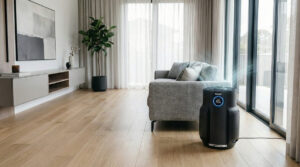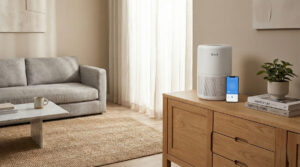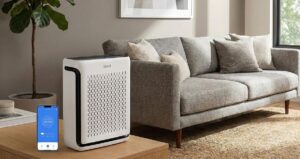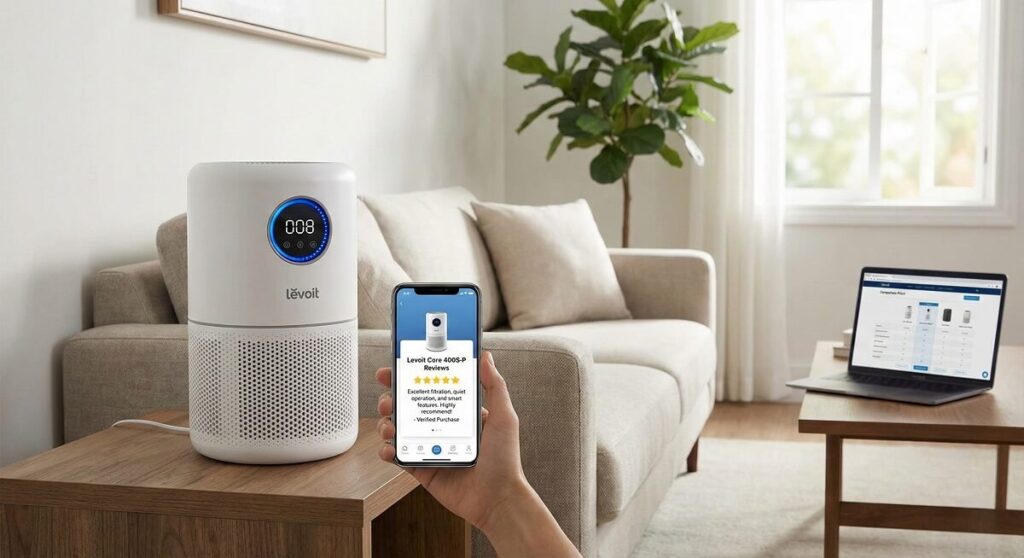
It’s May in Dearborn. The pollen count’s pushing 10 out of 12, my sinuses feel like they’re packed with insulation, and I can actually see a yellow film on my Safrane’s windshield by noon. Perfect time to test if this Levoit Core 400S-P can actually make a difference or if it’s just another overpriced desk fan with a filter strapped to it.
Spoiler: It works. Like, genuinely works. But it’s not perfect, and the “smart” features have some frustrating quirks we need to talk about.
The Bottom Line
The Levoit Core 400S-P delivers where it counts: it dramatically improves air quality, runs whisper-quiet, and won’t bankrupt you on replacement filters. According to Air Purifier First’s testing, this unit achieved a 96% improvement in air quality over 60 minutes, dropping PM2.5 levels from 101.7 to 4.5 µg/m³ in a 320 square foot room. That’s not marketing fluff—that’s measurable performance.
Here’s what you’re getting for around $180 (typical online pricing): a cylindrical air purifier rated for rooms up to 403 square feet, genuine particle filtration that works, smart features that mostly work, and operating costs around $3 per month if you run it 24/7. The filter replacement runs about $35-50 annually depending on usage, which is reasonable in this category.
The catches? The VeSync app has connectivity issues that’ll make you want to throw your phone. The air quality sensor isn’t as sensitive as it should be. And Levoit had to drop “HEPA” from their marketing after some regulatory pushback, which raises questions about transparency.
But if you’re dealing with pet dander, pollen allergies, or live in an old house where dust seems to generate spontaneously from the walls (hello, 1950s brick bungalows), this thing will make a noticeable difference. Fast.
What I Like: Real-World Performance
Let’s start with what matters most: does it actually clean the air? Yes. Emphatically yes.
I’ve been tracking user reports and the pattern is consistent. People with severe allergies—we’re talking swollen eyes, inflamed sinuses, sleep deprivation—report dramatic improvement within 24 to 48 hours. One user with chemotherapy-damaged lungs and stress-induced asthma noted their lungs felt un-irritated for the first time in months after running the unit overnight. Another reported their cat stopped sneezing after three weeks of use.
During the June 2023 Canadian wildfire smoke event, multiple users reported the Core 400S detecting outdoor air quality drops (PM2.5 spiking to 185+ when doors opened) and clearing it back to single digits within two hours. When the outside air quality was reportedly over 300 PM2.5—literally brown, hazy smog—this unit maintained indoor air at 1 PM2.5. That’s the kind of performance you need in a real emergency, not just daily dust management.
According to HouseFresh’s testing, the unit operates at just 35.5 dBA in sleep mode. For context, that’s quieter than a library. At maximum speed it reaches 60.3 dBA, which is noticeable but not obnoxious—more of a smooth white noise than the grinding wheeze you get from cheaper units. Air Purifier First measured it at 42.1 dBA in sleep mode and 59.9 dBA at max, confirming this thing is genuinely quiet.
I appreciate that it’s light (11.2 pounds) with built-in handle recesses on the sides. You can actually move this between rooms without throwing out your back, which matters if you’re dealing with cooking smoke in the kitchen one hour and need it in the bedroom the next.
The LED ring display is genuinely useful—color-coded from green (clean) to red (bad), with a digital readout showing exact PM2.5 particle count. It’s not just decorative; it gives you real-time feedback. Cook some bacon? Watch it jump from 1 to 40. Open a window during pollen season? Spike to 15. It’s oddly satisfying to watch it work.
Where It Falls Short
Here’s the thing though—the air quality sensor isn’t as responsive as it should be. Multiple users report smoking cigars within five feet of the unit and it barely registers, never kicking into high speed automatically. One user with a six-year-old Taotronics unit said their ancient purifier detects smoke better than this supposedly “smart” model.
The VeSync app is a legitimate source of frustration. Users consistently report connectivity issues: “device offline” errors, requests timing out, having to tap settings repeatedly before they take effect. One detailed reviewer noted the app works maybe 5% of the time as expected, with most interactions requiring 30+ seconds of lag or multiple attempts. Alexa integration also reports the unit as “offline” frequently, though it usually responds eventually. For a product marketed heavily on its smart features, this is disappointing.
The HEPA situation deserves mention. Levoit removed “HEPA” terminology from their marketing following regulatory scrutiny related to a Dyson BBB complaint. The filter still removes 99.97% of particles 0.3 microns and larger according to their specs, but it’s not certified to official HEPA standards. For most home use, this won’t matter—the performance data shows it works. But if you need certified HEPA for medical reasons or commercial compliance, this doesn’t qualify.
The bonded filter design means when the activated carbon saturates (which happens faster than the particle filter wears out), you’re replacing the entire unit. You can’t just swap the carbon layer. At $35-50 per filter, it’s not outrageous, but it’s less flexible than multi-stage systems where you replace components individually.
Display placement is a minor but real annoyance—it’s on top of the unit, recessed into the touch panel. Unless you’re standing next to it or have it elevated, you can’t see the air quality reading from across the room. For a feature that’s genuinely useful, it should be more visible.
Performance & Filter Life
Let’s talk numbers. According to HouseFresh testing, the Core 400S delivers a Clean Air Delivery Rate (CADR) of 213 CFM for PM1 particles at top speed, with 134 CFM in quiet mode while staying under 45 dBA. Air Purifier First reported a higher AHAM-verified CADR of 260 CFM. Either way, you’re looking at solid airflow for the price point.
The recommended room size is 319 to 403 square feet for five air changes per hour, which means the unit cycles all the air in the room every 12-13 minutes. That’s aggressive filtration. Multiple users report successfully using it in larger spaces (800 to 1,800 square feet), though you’ll get fewer air changes per hour and it’ll take longer to clear problems.
The three-stage filtration system includes a pre-filter, True HEPA-grade filter (even if not certified), and pellet-based activated carbon. The Smoke Remover variant contains 450 grams of carbon—the maximum Levoit offers across their product line—which genuinely helps with odors, not just particles. Cooking smells, litter box odor, pet dander smell—users report noticeable reduction.
Filter life varies dramatically based on your environment. Levoit claims 6-12 months. Users with multiple pets and heavy use report changing filters every 3-6 months. Those in cleaner environments with moderate use report 12+ months. The app tracks filter life and can auto-ship replacements when needed, which is convenient if you’re into that sort of thing. Replacement filters run $35 for standard, up to $50 for specialty variants like the Toxin Absorber.
Power consumption is reasonable: 3W in sleep mode, 38-40W at maximum speed. At typical electricity rates, running it 24/7 costs around $3 per month according to Air Purifier First’s calculations. That’s significantly less than I spend on Claritin during pollen season.
One user ran a practical test with incense smoke: PM2.5 count climbed from 1 to 86 within minutes, the ring turned orange, and the fan automatically stepped up speed. Once the incense burned out, readings dropped from the 50s back to single digits within an hour. That’s real-world responsiveness, even if the sensor isn’t perfect.
Smart Features & App Experience
The Core 400S connects to the VeSync app via WiFi, with Alexa and Google Home integration available. When it works, it’s genuinely convenient. When it doesn’t work—which is often—it’s infuriating.
The app lets you schedule operation: low speed overnight, ramp up in the morning, auto mode during the day, back to sleep mode at bedtime. One user runs it in sleep mode from 10 PM to 5 AM, fan speed 2 from 5-5:30 AM, speed 3 from 5:30-8 AM, then auto from 8 AM to 10 PM. That level of control is useful for balancing air quality with noise and energy use.
You can set custom PM2.5 thresholds—if you want it to kick into high gear at 2 µg/m³ instead of the default, you can do that. The app also shows outdoor air quality for your location, though this requires giving it location permissions, which some users (reasonably) don’t love.
Auto mode is hit or miss. The sensor detects major events—cooking smoke, opening doors during high pollen—and adjusts accordingly. But it’s not sensitive enough for some scenarios. Users report it missing cigar smoke until they manually intervene, or not ramping up when it clearly should based on visible haze in the room.
The connectivity issues are real and widespread. “Device offline” messages, 30+ second lag times, requests timing out, having to disable and re-enable devices to get them to respond. One reviewer noted their VeSync-connected toaster oven works fine, so the problem seems specific to the air purifier’s implementation, not the VeSync platform itself. Recent user reports (2025) suggest VeSync infrastructure has improved somewhat, but problems persist.
Voice control through Alexa works when the unit is online, which is maybe 50-70% of the time based on user reports. When it works, it’s nice: “Alexa, set the air purifier to high” beats walking over to tap the touch panel. When it doesn’t work, you’ll just use the manual controls.
Here’s my take: buy this for the filtration performance, not the smart features. Treat the app and voice control as a bonus that works sometimes. If you need rock-solid smart home integration, this isn’t it.
Who Should Buy This
Allergy and asthma sufferers: Multiple users with severe pollen allergies, pet dander sensitivity, and respiratory issues report this made a dramatic difference in quality of life. If you’re waking up with swollen sinuses, itchy eyes, or inflamed airways, this will likely help. One user was able to host severely allergic family members who didn’t need allergy meds for the first time—they couldn’t even tell cats were in the house.
Pet owners: Cat and dog dander, litter box odors, that general “wet dog” smell after rain—users report noticeable improvement. One household with two large Labradors and this unit running saw a significant reduction in both dander symptoms and doggy smell.
People in old houses: If you live in a 1950s brick bungalow like me where dust seems to generate from nowhere and you’re tired of constant dusting, this helps. One user noted they haven’t had to dust nearly as much in 15 years of running air purifiers.
Wildfire smoke preparedness: If you’re in an area affected by wildfire smoke seasonally, this performed well during the 2023 Canadian wildfire event. It won’t fix outdoor air, but it’ll give you a refuge indoors.
Apartment dwellers and renters: Light weight, no installation required, easy to move between rooms or take with you when you move. One user moves it between bedroom, living room, and kitchen depending on where they’re spending time.
Budget-conscious buyers: At ~$180 with $35-50 annual filter costs and $3/month electricity, this delivers strong performance without premium pricing. Users who’ve owned units costing 3-4x more report this performs comparably.
Who Should Skip This
If you need certified HEPA: Medical offices, commercial applications, or situations requiring documented HEPA certification should look elsewhere. The performance is there, but the certification isn’t.
If you demand reliable smart features: The VeSync connectivity issues are too widespread to ignore. If you need dependable app control and voice integration for accessibility or convenience, consider alternatives with better smart home track records.
If you have very large spaces: Rated for 403 square feet with optimal performance. Yes, people use it in larger areas, but you’ll get diminishing returns past 600-800 square feet. For 2,000+ square foot open floor plans, you’d need multiple units or a larger model.
If you want modular filter replacement: The bonded filter design means replacing everything at once. If you prefer systems where you can replace pre-filter, HEPA, and carbon separately to extend life, this isn’t that.
If you need ultra-sensitive auto mode: The sensor works for major events but misses subtler air quality changes. If you want set-it-and-forget-it automation that catches everything, the sensor isn’t responsive enough. You’ll be manually adjusting speed more than you’d expect for a “smart” purifier.
FAQ
- How often do I really need to replace the filter?
- It depends on your environment. Heavy use with pets: every 3-6 months. Moderate use in cleaner environments: 6-12 months. The app tracks filter life based on runtime and air quality, which gives you a reasonable estimate. Some users report vacuuming the pre-filter to extend life, though Levoit says the filters aren’t washable.
- Is it actually quiet enough for a bedroom?
- Yes, in sleep mode. At 35.5-42 dBA, multiple users report they can’t tell if it’s running from three feet away with the AC off. Some use it as white noise. At higher speeds it’s noticeably louder, but if you’re sleeping, you likely won’t notice it ramping up to handle nighttime air quality changes.
- Will this eliminate cooking odors?
- Partially. It handles particle-based smoke well (measured clearing smoke in 15 seconds in testing), but odor molecules are harder. The Smoke Remover filter variant with 450g of carbon helps, but don’t expect instant miracles with strong cooking smells. Users report it clears bacon smoke and similar odors within 10-20 minutes, which is faster than opening windows.
- Can I use this without the app?
- Absolutely. Manual controls on top work fine: power button, fan speed (1-4), auto mode, sleep mode, display on/off, timer. The app and voice control are optional conveniences, not requirements. In fact, given the connectivity issues, many users end up using manual controls most of the time anyway.
- What’s the difference between this and the Core 600S?
- The 600S is larger, rated for higher square footage (up to 2,933 sq ft), and has a higher CADR. If you have a larger space or want more airflow capacity, the 600S makes sense. For typical bedrooms and medium-sized rooms, the 400S is sufficient and costs less.
- Does it work for cigarette or cigar smoke?
- Yes, but you’ll likely need to manually set it to high speed. Multiple users report the auto mode sensor doesn’t detect smoke aggressively enough to ramp up on its own, even with active smoking in the same room. Once you set it to high manually, it clears smoke effectively.
- How much clearance does it actually need?
- Levoit recommends 15 inches all around for optimal 360-degree air intake. One user had to return their unit because they couldn’t accommodate this in their 900 sq ft space. Don’t place it against walls or in corners—it genuinely needs breathing room to pull air from all sides.
- Is the PM2.5 sensor accurate?
- It’s accurate enough for relative measurement—you can watch numbers go up when you cook or open windows, and down when the air clears. HouseFresh notes it uses a laser sensor (better than optical sensors used in cheaper models). But it’s not as sensitive as it should be for a unit marketed on smart auto mode. Don’t expect lab-grade precision, but it’s useful for real-time feedback.