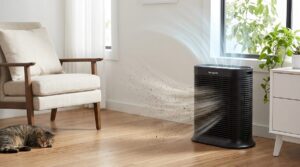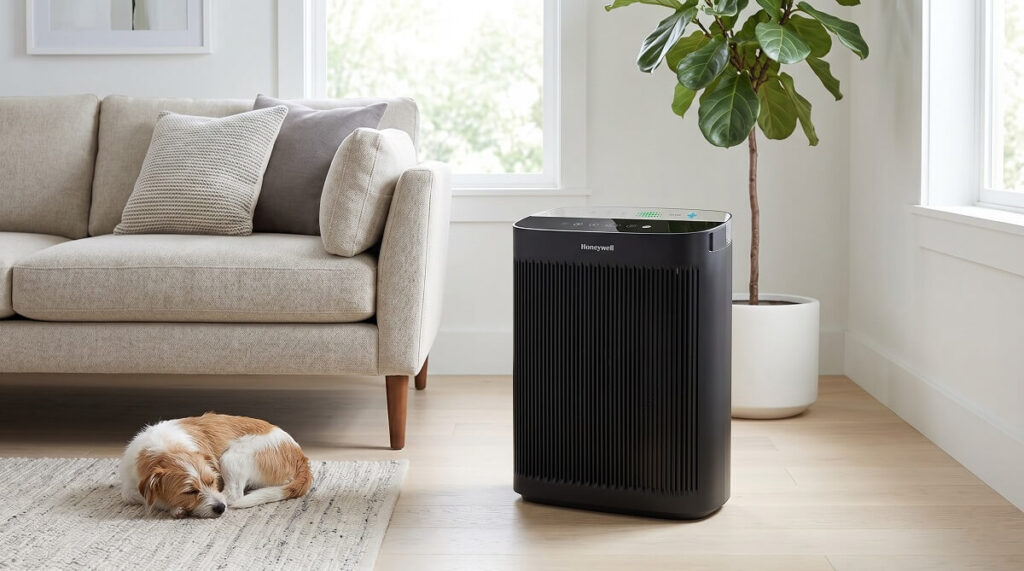
Harry’s 119-year-old house produces dust worse than a chainsaw. Dust a table on Monday, you can write your name in it by Wednesday. That was life until he dumped an ashtray with a smoldering cigarette and watched the room fill with smoke. He cranked his new Honeywell HPA5300 to Turbo mode. Five minutes later? Crystal clear. No smoke. No odor. “I’m SOLD!” he wrote. “Well worth the bucks!”
Harry isn’t alone. After analyzing 100+ verified owner reviews spanning multiple size configurations (938 sq. ft., 1700 sq. ft., and 2400 sq. ft. models), one thing is clear: the Honeywell AllergenPlus HPA5300 delivers serious air purification for serious spaces. Whether you’re battling wildfire smoke, clearing cat odors from a house where the previous owner had an “illegal number” of cats, or just trying to breathe easier with allergies, this extra-large workhorse earns its reputation.
The Bottom Line
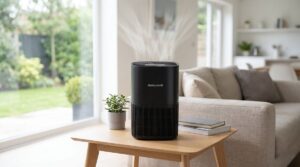
The Honeywell AllergenPlus HPA5300 is an extra-large room air purifier that delivers genuine HEPA filtration for spaces up to 500 square feet (with 4.8 air changes per hour) or up to 2,423 square feet at 1 air change per hour. At around $249-319 (typical online pricing), it sits at the premium end of consumer air purifiers but delivers premium performance.
According to manufacturer specifications, the unit achieves CADR ratings of 323 for tobacco smoke, 335 for dust, and 335 for pollen—AHAM Verified numbers that put it among the most powerful consumer purifiers available. Three Type R True HEPA filters capture 99.97% of airborne particles down to 0.3 microns, while the Type A activated carbon pre-filter tackles odors and VOCs.
The standout feature: an air quality sensor with color-coded feedback that actually works. Multiple users report watching it detect cooking smoke, bathroom aerosols, and yes—flatulence—then automatically ramp up to clear the air. One owner noted her ecobee always showed “poor” air quality until she added the HPA5300. Now it reads “Clean.”
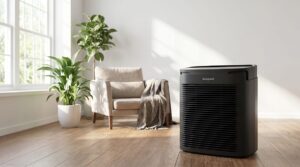
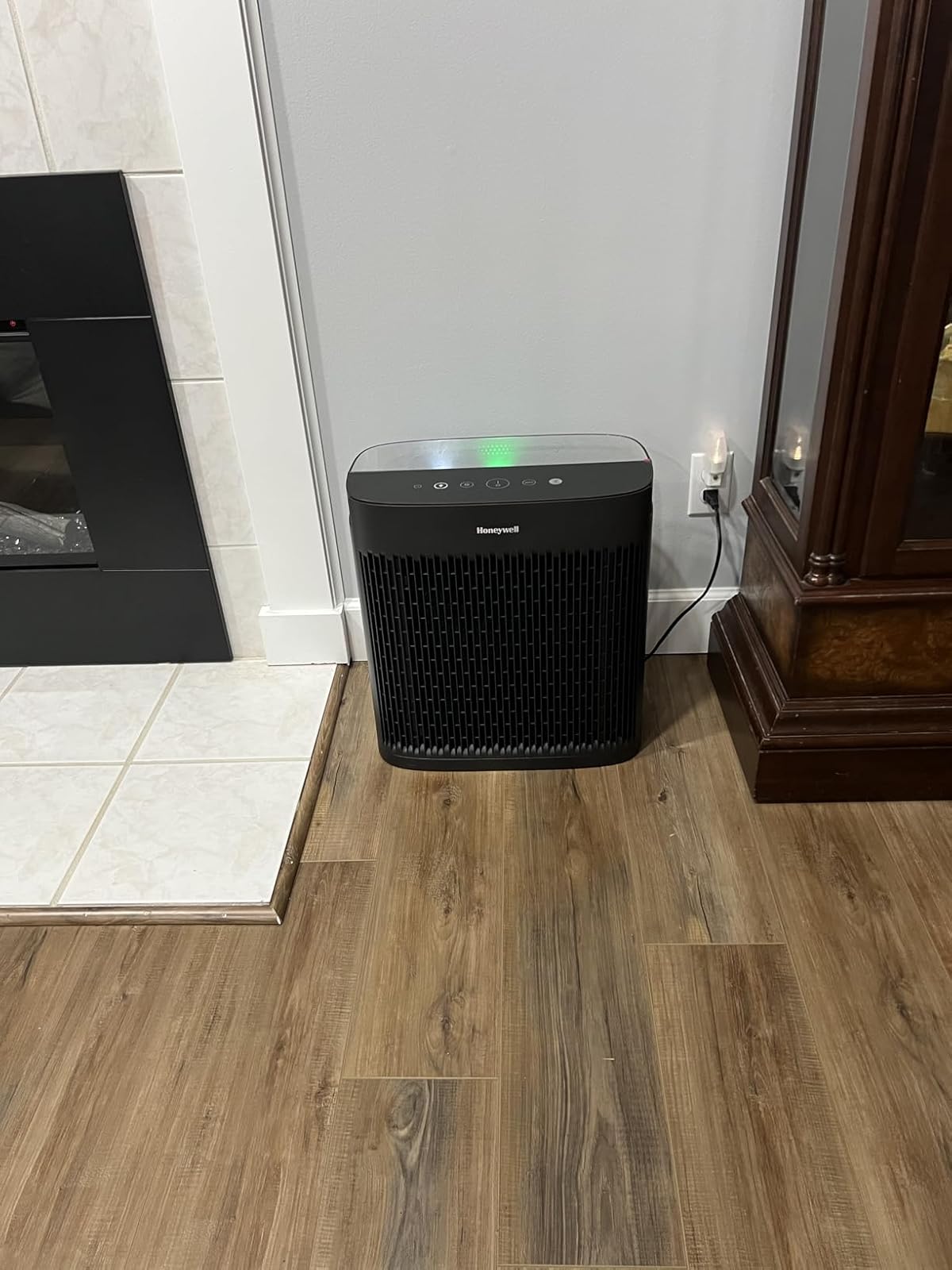
The catches? It’s big (19.1″ x 22.3″ x 10.08″) and heavy (27 lbs). Filter replacement costs add up—three HEPA filters annually plus quarterly pre-filters. The 48-hour auto-shutoff confused some users. And Turbo mode is loud enough that one owner uses it specifically to disturb neighbors who smoke outside their window.
But if you want a workhorse that will clear wildfire smoke in minutes, eliminate pet odors, and let allergy sufferers breathe freely, the HPA5300 is the unit that keeps proving itself in living rooms, bedrooms, and open floor plans across America.
What Users Love: Real Performance Under Pressure
The HPA5300 earns its stripes when conditions get extreme—and users have documented impressive results.
JOHN’s story stands out. He moved from California “wildfire-ville” to West Virginia, bringing his older HPA300 along. Then he got a cat he’s allergic to, bought a second unit, and eventually upgraded to the HPA5300 for its silence and power. But the real test came in his basement. The previous owner had kept an “illegal number” of cats there. The smell was horrific. He ran an HPA300 on lowest setting 24/7 and barely noticed cat odors. When he changed the HEPA filters after a year: “WOW! I wondered where the cat stink went? It was solidly collected as particles arrested in the 3 HEPA filter cartridges! I mean, THEY smelled HORRIBLE!” The filters had trapped years of embedded odor particles. As a retired board-certified RN in three fields, he writes: “I HIGHLY recommend them.”
Wildfire smoke puts air purifiers to the ultimate test. Timothy C. in LA County reports the HPA5300 was “VERY HELPFUL DURING THE WILDFIRES THAT RAGED” there. Sissy, dealing with severe pollen in her area that triggers asthma in multiple family members, found relief: “So far, it has been money well spent, and there have been no respiratory problems.”
The air quality sensor earns consistent praise. Tim delap tracked his results with an ecobee: “My air quality was always poor. It is now, ‘Clean’!!” Teresa Pagano was surprised when her HPA5300 activated while she was in another room using hairspray or cleaning products—it detected the chemicals through the air and kicked up automatically. “Highly recommend,” she wrote.
Elle94 discovered an unexpected feature: “My purifier lives on the automatic setting. I notice certain things that cause it to kick up to a higher setting: Hairspray, burnt food in my kitchen, and yes… farts.” She watched skeptically at first, thinking it was coincidence. It wasn’t. “My air purifier was calling me out every single time I had gas!” When guests visit and the red light turns on, she smiles, “knowing that my guest thinks their silent fart has gone unnoticed. Little do they know, Agent Honeywell has betrayed them.”

Noise Levels: White Noise Champion or Jet Engine?
The HPA5300’s noise profile is its most praised feature compared to older Honeywell models—and a major reason for upgrades.
Steve, replacing older round Honeywell units after “many years of uninterrupted service,” calls the new models “50% less noisy than older units except when on high.” He and his wife did extensive research before purchasing: “Though skeptical at first, after we ordered the larger unit HPA5300B, we ordered a second smaller unit.”
SHARKY makes the comparison explicit: “My other one I had (air cleaner) on low it sounded like this one on turbo. But this one is way quieter. I love it.” This from someone who’s used Honeywell air cleaners since 1997.
For sleep, the reviews are overwhelmingly positive. KMK reports: “I have not woken up with a headache since purchasing this air purifier. It’s quiet to run 24/7.” Sami A. uses the flexibility: “This air filter could either be quiet or loud. Quiet during the day and loud when I put it on max before I sleep. Sleep quality improved.” JHny echoes: “The soothing sound lulls me to sleep at night. Just perfect.”
erich drettmann calls it “AMAZING” specifically for noise: “Within the first 4 hours of use my sneezing and chest congestion was 100% improvement. It runs SUPER quiet, basically a white noise and hardly noticeable with TV on.”
MDB007 specifically bought it for white noise: “We were looking for a filter but more a loud fan to replace our 25 year old round Honeywell which finally died.” He tried a Levoit but returned it—not loud enough. The HPA5300 on Turbo “gives an extra level of white noise, not as loud as the old one but seems to work.”
A. O.F. found a creative use: “Cigarette smoke kept drifting into our place so I bought it because it’s automatic and it turns up nice and loud so to disturb the people smoking at night. But it’s nice and quiet during normal operation.”
Pet Owners and Allergy Sufferers: Life-Changing Results
The HPA5300 delivers dramatic results for households with pets and allergies—often both simultaneously.
dannaBats the dragonSlayer runs it constantly with cats: “It has been running for 3 months straight with no issues. We pull out the pre-filter and bang it off outside every month or so cause it does catch a lot of cat fur.” The result? “I forget its there most days.”
Sami A. confirms the cat hair benefit: “Catches it all. Great air filter. Sleep quality improved and air flow helps and unwanted smells.”
Michele Rosendale’s household has multiple allergy sufferers with cats. Since purchasing: “We have had significant reduction in allergies, we sleep better and my elderly sister no longer needs to use her CPAP.” The sensitivity of the air quality sensor impressed her: “My husband farted and the thing detected it and kicked into high gear! It also kicks on when I clean the bathroom, detecting the chemicals in the air.” Her verdict: “I cannot recommend this enough.”
Jonathan.vagabond and his wife are “crazy rabbit people,” but she’s allergic to basically everything. They’d spent $600 on a Rabbit Air years earlier—”honestly it has never helped that much.” The HPA5300? “The first day I came downstairs to our main living area (and where the rabbits live), I could immediately smell the air was cleaner.” He’s writing the review while ordering a second one. His summary: “100% worth it, and WAAAYYY better than Rabbit Air, while also somehow being half the price.”
Stevi’s father-in-law recommended it for her asthma and “stinky dog”: “So far it seems to be working great and it’s so quiet not like the old air purifiers that you could hear in another room.”
Sarutaru06 was skeptical: “I always thought air purifiers were a hoax.” Then he saw how well they worked on YouTube capturing bird feathers. He bought enough for his office and all bedrooms because his kids kept waking up congested. “I’d hoped we’d see those symptoms disappear in a couple weeks. It immediately helped relieve my common headaches that I thought were caused solely by starring at computer screens all day.”
Filter System and Replacement Costs
The HPA5300 uses a tiered filter system: Type A pre-filters (replaced every 3 months) and three Type R True HEPA filters (replaced every 12 months). Understanding the costs upfront matters.
Steve highlights a major upgrade: “The Hepa filters are all the same for all sizes for all air purifiers under the Honeywell Insight series. Before these newer units, each Hepa filter were independent sizes and very costly.” You can buy Type R HEPA filters in bulk for savings, and the Type A pre-filters come in sheets sized per unit. The interchangeable system means owning multiple Honeywell units gets more economical over time.
SHARKY does the math: “If you want the S filters you need to buy three of them. I went to buy one and they were $31 so that means we’re gonna have to pay $93 to get three filters that you have to exchange in three months.” He opts to skip the optional S filters and stick with standard replacements.
Nathalie raises the availability concern: “Works great. The machine is perfect and durable. I am just having trouble finding filters.” Multiple users recommend buying replacement filters when you purchase the unit—stock levels vary.
Vicstro offers perspective from Consumer Reports research: “Found it through Consumer Report ratings and it was a great choice. I’ve had it 3 years and only needed to change my filter once.” Her advice: “Only recommend buying an extra pack with the machine because the filters last so long you want to make sure you have them a year or 2 later.”
Miss extends filter life through maintenance: “I vacuum the black carbon pre-filters regularly and have not had to replace them. I also occasionally rinse off the black pre-filters. No soap or scrubbing, just a gentle rinse, hang to air dry. The instructions state ‘do not do this’, but I have not had problems.”
D. offers the long-term view after 2 years: “Make sure you change both filters REGULARLY (pre-filter and HEPA filter), and make sure you use *legitimate* good-quality HEPA filters. I know it’s tempting to save a few dollars buying a third party filter, but make sure any filter you get is compatible and actually HEPA certified. Buy a multi-pack to save, and it’ll work out to a very small amount of money per year—well worth the benefits.”
Design and Controls
The HPA5300 represents a significant design evolution from older Honeywell models—and users notice.
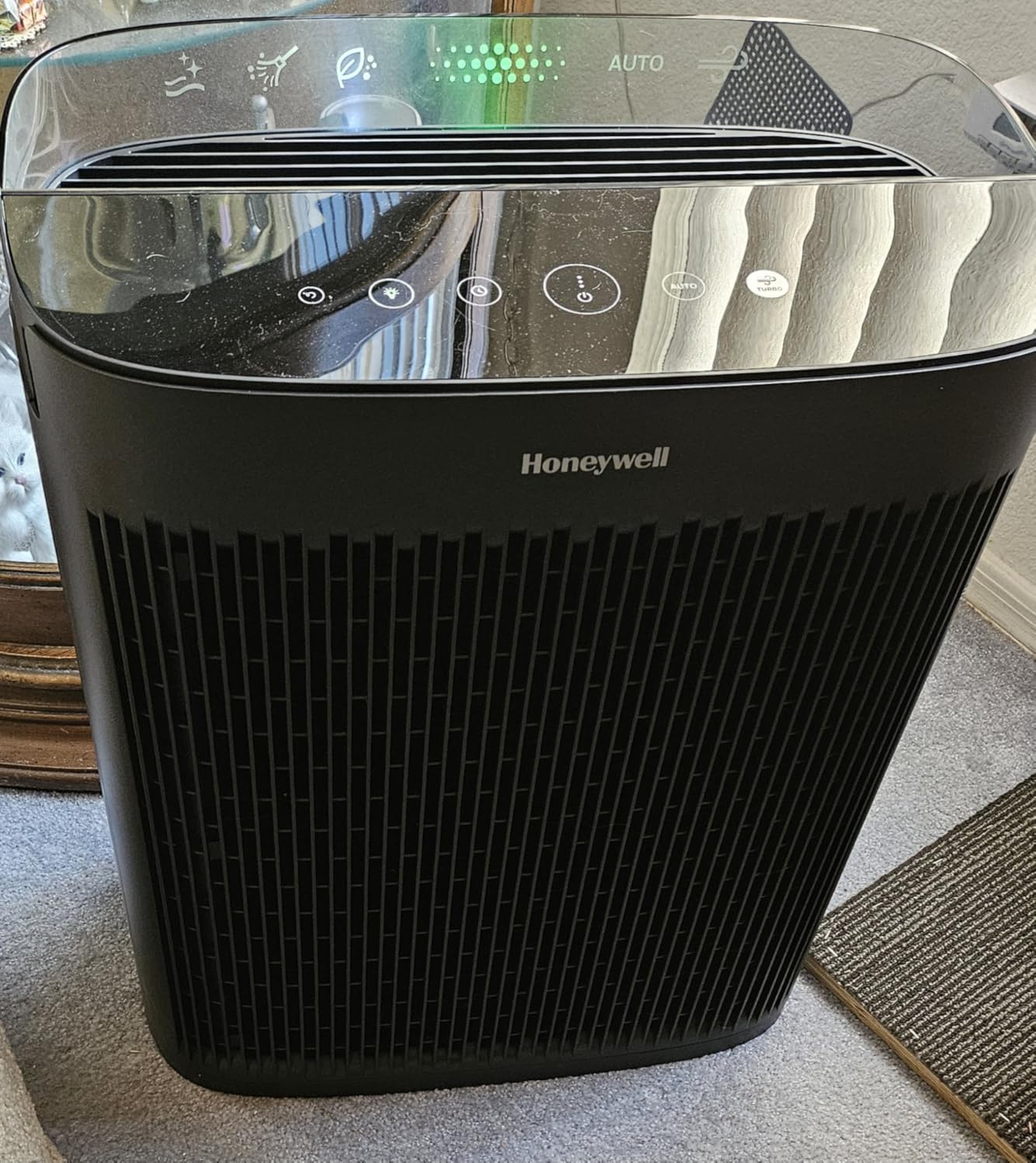
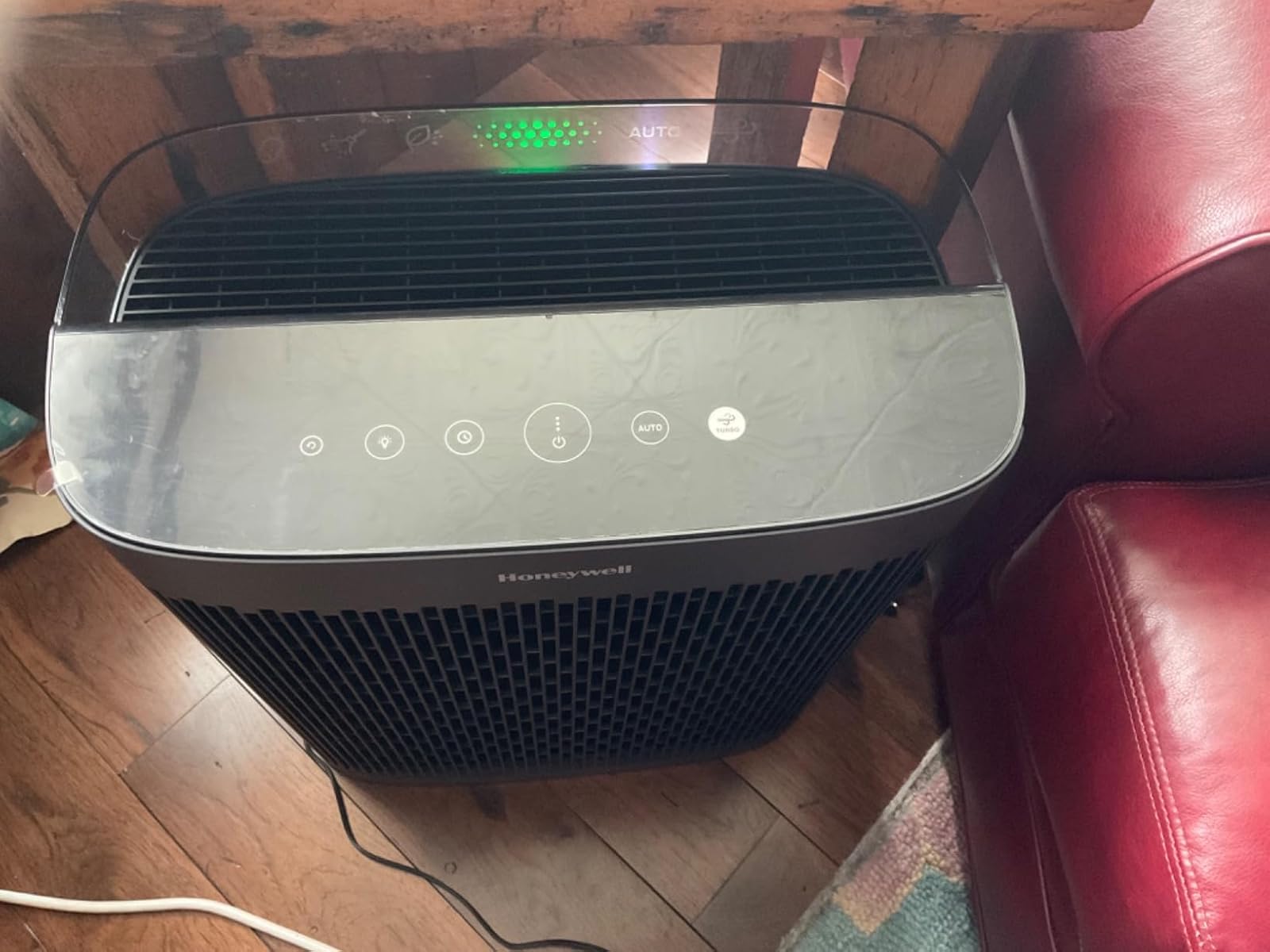
Steve describes the upgrade: “The older units were round, large and somewhat noisy and the newer units are aesthetically pleasing, like an attractive piece of furniture.” He specifically praises the visual feedback: “There is even a projection of speeds against a clear plastic border around the top the unit to permit easy visual of the speed and filter cleanliness.”
Amazon Customer appreciates the clear display: “Several photos online make it look like it has a top that is half white and black plastic, but it is really a curved piece of clear plastic which has frosted icons that are illuminated from below.”
Twiddles42 prefers simpler models but adapted: “I prefer simpler models, but gave this modern one a try. Simple models just have a fan and a physical toggle switch. This one has whizzy LEDs and soft-touch digital lights, but does it stylishly enough.” His solution for preferring physical switches? “A powerstrip will take care of any desire for a physical toggle switch.”
The control panel offers four cleaning levels, a 2/4/8-hour timer, and display dimming. MDB007 confirms: “There are LED lights to show speed and cleaning which all can be turned off or dimmed so they don’t flood the room with light.”
Jonathan A Parsons notes one quirk for cat owners: “My only reservation about it is that the controls are on the top and if you have cats that are likely to jump on top of them they can turn it off accidentally.”
One legitimate complaint from SHARKY: “This thing turns off by itself after 48 hours for some reason—the auto came on by itself, but I never touched it.” The 48-hour auto-shutoff is a safety feature some users find annoying. Mary. K. notes: “If you connect it to a timer, once the electricity goes off and then comes back on it can not turn on again. You would need to turn it on by yourself.”
Customer Service and Warranty
The HPA5300 comes with a 5-year limited warranty, and users report positive experiences with Honeywell support.
John D 333 had a noisy unit out of the box—”sounded like I had a bunch of crickets in the house regardless of speed.” He learned vendor support isn’t provided by Honeywell directly but by the sole distributor. After two calls, “both very professional, helpful, understanding and efficient,” they shipped a replacement the next day without waiting for his return. “This unit has a 5-year warranty and they mean it.”
bkuave had a similar experience with a ticking noise from the fan motor: “Called the number to Honeywell provided in the Amazon information and wham, got through right away, explained the issue, and in THREE DAYS had a new unit on the front porch. Problem solved just like that.”
randall henderson specifically tested customer service: “I go with HW all the time since they are an old established company and know to last with very good Customer Service, I called them just to see they are still on task.” His verdict: the air is cleaner and fresher, and he’s buying a Honeywell humidifier and dehumidifier too.
Sissy praises responsiveness: “Honeywell’s customer service has been first class, with real, intelligible human beings that are genuinely helpful and kind.”
Who Should Buy This
Large room and open floor plan owners: The 2400 sq. ft. coverage (at 1 air change per hour) handles living rooms, great rooms, and connected spaces. Multiple users run it for combined kitchen/living/dining areas successfully. David Angell confirms: “Handles my 1200 sq ft apartment.”
Allergy and asthma sufferers: Documented relief across dozens of reviews. Sissy’s asthma-prone family members, Michele Rosendale’s household, and Sarutaru06’s congested kids all found relief. The True HEPA filtration captures the particle sizes that matter for allergens.
Pet owners with serious odor or dander issues: Cat boxes, dog smell, rabbit dander—the HPA5300 handles it. JOHN’s basement cat odor story is extreme but illustrative. Jonathan.vagabond’s comparison to a $600 Rabbit Air is telling.
Wildfire and smoke-prone regions: Documented performance during California wildfires and Canadian smoke events. Harry’s 5-minute smoke clearance test demonstrates real-world capability.
Buyers seeking premium build quality: The 5-year warranty, metal construction, and user reports of decade-long durability on older Honeywell models suggest this unit will last. Me gave away her previous Honeywell after “6 years running non-stop and still worked like new.”
White noise seekers: Multiple users specifically chose this for sleep white noise. The Turbo setting provides substantial sound; lower settings offer gentle background noise.
Who Should Skip This
Small room or apartment needs: At 19″ x 22″ x 10″ and 27 lbs, this is a substantial unit. JJBigs returned it because it was “too large size, no great location to set up.” The HPA5200 (1700 sq. ft.) or HPA5100 (939 sq. ft.) fit smaller spaces better.
Budget-conscious buyers: At $249-319 plus ongoing filter costs, this isn’t cheap. The HPA200 delivers similar technology at lower cost for smaller spaces.
Smart home integration needs: No WiFi, no app, no voice control. The air quality sensor works locally but doesn’t connect to home automation systems. Users wanting smartphone control should look elsewhere.
Users who dislike auto-shutoff: The 48-hour auto-shutoff frustrates some users. SHARKY was annoyed enough to switch brands. If you want truly continuous operation without intervention, this may irritate you.
Those seeking portability: At 27 lbs with no wheels, moving this between rooms is a workout. Charonna notes: “The only draw back is that it’s not on wheels, so if you want to move it you have to pick it up at 22x19x8 inches. It’s rather bulky to move.”
FAQ
- How loud is it really?
- On low settings, users consistently describe it as quiet white noise—barely noticeable with a TV on. Turbo mode is loud enough that one user specifically uses it to bother smoking neighbors. Most owners run lower settings when in the room and Turbo when away. Compared to older round Honeywell models, multiple users call it “50% quieter.”
- Does the air quality sensor actually work?
- Yes, with impressive sensitivity. Users report it detecting cooking smoke, hairspray from other rooms, bathroom cleaning products, and flatulence. The color-coded display (green/yellow/red) provides instant feedback. Angela Carnes reports it detected a carbon monoxide issue before they noticed symptoms.
- How often do filters really need replacement?
- Honeywell recommends pre-filters every 3 months and HEPA filters every 12 months. Real-world results vary: Vicstro needed only one filter change in 3 years. Heavy-use environments with pets or smoke may need earlier replacement. Multiple users extend pre-filter life through vacuuming, though Honeywell advises against it.
- Is it worth the price over smaller models?
- For large spaces, yes. The CADR ratings (323 smoke, 335 dust, 335 pollen) outperform smaller units significantly. If your space is under 1000 sq. ft., the HPA5200 or HPA5100 offer better value. For open floor plans and great rooms, the HPA5300 delivers.
- Why does it shut off after 48 hours?
- The auto-shutoff is a safety feature. Users who dislike it recommend either checking daily or using a smart plug with scheduling to restart it automatically. The unit won’t restart automatically after power interruption—you must press the power button.
- Can it handle cigarette or wildfire smoke?
- Yes. Harry’s 5-minute smoke clearance test, Timothy C.’s LA wildfire experience, and multiple users report effective smoke removal. The HEPA filtration captures smoke particles while the activated carbon pre-filter addresses odors.
- Does it work for cat allergies specifically?
- Yes. JOHN’s extreme basement story, dannaBats’ constant operation with cats, and Michele Rosendale’s household with cats and allergy sufferers all document effectiveness. The True HEPA filters capture dander particles; the pre-filter catches hair.
- How does it compare to the older HPA300?
- The HPA5300 is the updated version with the same filter system (three Type R HEPA filters) but adds an air quality sensor, auto mode, modern touch controls, and a significantly quieter motor. Users upgrading from HPA300 models consistently praise the noise reduction and smart features.
What Real Owners Are Saying
The pattern across 100+ reviews is remarkably consistent: this unit delivers serious air purification with measurable results.
Live Freely captures the everyday experience: “Pleased with this device and it has helped keep the air a bit cleaner. On low and medium settings it’s very quiet and you can barely notice it’s running.” Ron’s 30-day update: “All is well, working as intended. Unit runs quiet, kicks up now and then as it filters higher particulate counts. I like it!”
The longer-term users are equally positive. Me’s previous Honeywell ran “6 years running non-stop and still worked like new”—she gave it away when moving and immediately bought this newer design. blogthis notes the build quality: “Large and has a little weight, you can feel the quality.”
BG summarizes the design evolution: “Brilliant design! The air quality display and other design elements are sophisticated, futuristic and functional. The air purifier is impressive in every way. Congratulations to the team who made this product.”
The negative feedback is minimal and specific: the 48-hour auto-shutoff frustrates some, filter costs add up, and it’s too large for small spaces. But for the intended use case—cleaning air in large rooms for allergy sufferers, pet owners, and those dealing with smoke—the HPA5300 delivers.
Denese puts it simply: “Pleased with its performance. Air in my room feels so different, fresh.” And that’s what an air purifier should do.