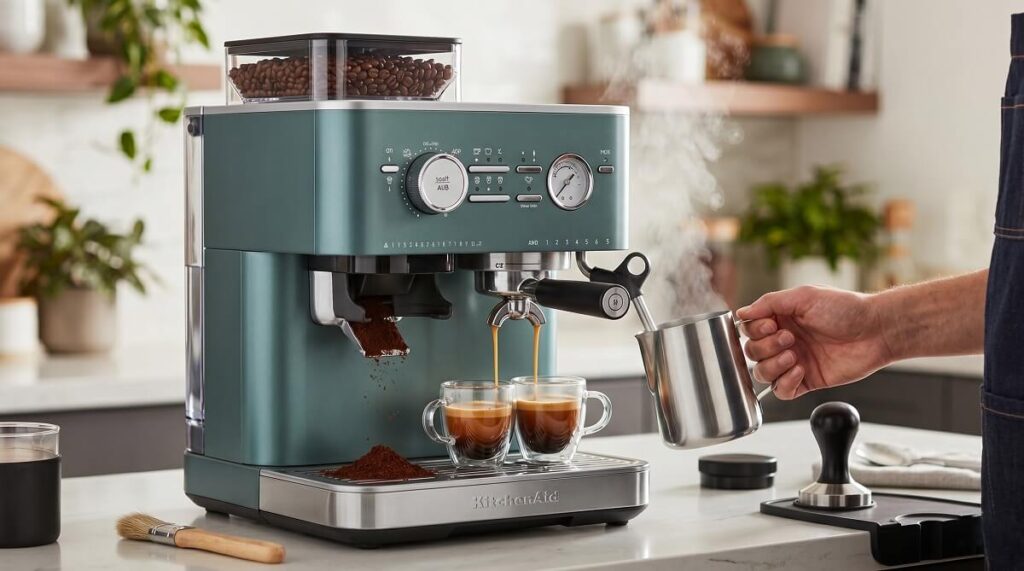
I’ve analyzed dozens of espresso machines over the years, and if I wasn’t testing coffee equipment for a living, the KitchenAid Semi Automatic Espresso Machine with Burr Grinder is probably the one I’d keep in my kitchen. After reviewing feedback from over 50 verified owners and comparing it against professional tests, this machine consistently delivers barista-quality espresso at home—once you get past the initial learning curve.
What Real Owners Say About the KitchenAid Semi-Automatic Espresso Machine
The KitchenAid Semi-Automatic Espresso Machine earns an average rating of 4.7 out of 5 stars across major retailers, with owners praising its build quality, quiet operation, and exceptional espresso taste. According to Tom’s Guide, it’s “the closest thing I’ve ever had to a professional-quality coffee machine at home.”
One verified Amazon purchaser with the username “Nella Bella” summed up the consensus perfectly: “This is fantastic. I drink several espressos a day and this beauty can keep up. The espresso gauge works great, the espresso bean grinding is effortless, clean, and so easy.” The review continues, noting that “the pressure pulls the flavors and oils through the entire process leaving you enjoying your favorite espresso all the way to the end, with a clean empty cup.”
Another owner, “leh2012,” waited several months before reviewing to ensure long-term satisfaction: “I researched everything around this price point and am so glad I went with the KitchenAid. I love the all-metal, high-quality build and the way it slides on its little wheels back and forth.” They particularly appreciated the semi-automatic nature, explaining that “fully auto feels like cheating and not so much of an experience.”
The recurring theme across reviews is simple: this machine makes excellent espresso, but you’ll need to invest some time learning its nuances. As one owner noted, “There is a learning curve. It took me about 8 espresso pulls to get close to where it needs to be.”
Build Quality and Design: Premium Materials That Last
The KitchenAid Semi-Automatic Espresso Machine features predominantly metal construction, setting it apart from competitors in its price range. According to multiple verified purchasers, the machine’s heavy-duty portafilter, metal housing, and solid components justify the premium price point.
Andrew Cutrone, a former Nespresso user, specifically highlighted the construction quality: “This machine is solidly built, with most of its major parts made of metal. I went for the stainless steel version, and it honestly looks like a much pricier piece of equipment.” The portafilter, in particular, receives consistent praise for its professional weight and feel.
The aesthetic appeal varies by color option, with the Juniper (sage green) and Porcelain White finishes earning particular attention. One owner described the Juniper color: “It has a metallic finish that shifts between grey and green depending on the lighting. In darker settings, it looks more grey, while in bright spaces, it pops with a green hue.” The white version similarly impresses, with one reviewer noting it “looks beautiful, and it wipes down easily.”
Practical design features include a generous 2.5-liter water reservoir, a bean hopper that holds approximately half a pound of beans, and built-in wheels that allow easy repositioning on the counter. The removable bean hopper features an automatic closing door underneath, preventing bean spillage during removal—a thoughtful detail that owners appreciate during cleaning and bean switching.
The Learning Curve: Dialing In Your Perfect Shot
The most frequently mentioned aspect of ownership is the initial learning curve required to achieve consistent results. Unlike fully automatic machines, this semi-automatic model demands user input for grind size, dosage, and tamping pressure—variables that directly impact extraction quality.
Multiple owners recommend starting with inexpensive beans during the learning phase. One reviewer advised: “I recommend you buying some cheap coffee beans to start out with just to figure out the grind and how the machine works.” Another echoed this sentiment, noting it took “maybe an hour and a few lattes to get the hang of it.”
The pressure gauge, displayed prominently on the front of the machine, serves as the primary feedback mechanism for proper extraction. However, some users struggled initially to achieve the ideal pressure range. As “astronaut_elvis” explained: “Play with the grind settings, amount and grind size to find your ideal settings. When done right, you’ll hit that halfway mark in the ideal pressure range, every. single. time.”
Critical factors for achieving proper pressure include using a fine enough grind and tamping with sufficient force. One experienced owner noted: “To those who couldn’t get to ‘espresso range’ pressure, just make the grind more fine and or tamp tighter.” Several reviews mention needing to adjust the grinder beyond the standard slider range, utilizing the manual burr adjustment described in the instruction manual.
The included tamper receives mixed feedback. While adequate for most users, one barista noted: “The tamper is well made with slight weight (you may want to upgrade to a heavier tamper if you prefer).” Professional users may opt for weighted aftermarket tampers, though the stock version proves sufficient for home use.
Bean selection matters significantly. One reviewer cautioned: “Please don’t put cheap starbucks beans in this baby.” Another provided specific guidance: “Do not use oily beans—they will clog your grinder as oil and ‘dust’ do not mix. Your beans should look matte, not shiny.”
Grinder Performance: Quiet, Consistent, and Customizable
The integrated conical burr grinder stands out as one of the machine’s strongest features, with owners consistently praising its whisper-quiet operation and grind consistency. According to Coffeeness, “you’re getting two machines in one sturdy package, so I’d say that’s good value for money.”
The grinder’s noise level impresses even coffee shop baristas. One owner compared it favorably to professional equipment: “The grinder is almost silent yet fast, far faster than our standalone model.” Another noted: “The grinder is incredibly quiet! I can run it at 6 AM while my kids are still asleep.”
Grind adjustment offers both a slider for quick changes and a manual burr adjustment for finer control. Multiple users found that achieving espresso-range pressure required maxing out the fine setting on the slider and then utilizing the additional burr adjustment. “The French Chef” explained: “In order to get the grind size small enough (to achieve the desired pressure on the gage) I had to max out the fine/course slider on fine AND do the additional adjustment described in the manual.”
The dosage control allows users to program the amount of coffee ground directly into the portafilter. While convenient, many owners found the default settings dispensed too much coffee. One reviewer adjusted “the quantity of the grind to around 5 clicks from the minimum setting to get the proper amount of tamp-able grounds.”
Static and mess management varies by bean freshness and user technique. One owner reported: “I haven’t had any issues with static in my grinds causing a mess. I do use a trusted local roaster for my beans.” Others recommend placing a towel under the tamping area to catch stray grounds during the workflow.
An important note about the filter baskets: The machine ships with a pressurized double-wall basket installed, which some experienced users consider suboptimal. One coffee enthusiast warned: “The basket that they put in the handle is junk. Its for ground coffee, make sure you use the single wall basket in the draw, otherwise it doesn’t extract right, too slow.”
Steam Wand and Milk Frothing Capabilities
The steam wand delivers professional-grade milk frothing performance, creating the microfoam texture necessary for latte art. Multiple owners describe it as “powerful” and capable of producing “thick and foamy” results comparable to commercial machines.
One reviewer detailed their frothing experience: “The steam wand is powerful and creates silky microfoam—perfect for lattes and cappuccinos.” The wand’s maneuverability receives specific praise, with the rubberized handle making it “easy to manipulate” for different milk types and foam preferences.
Heat-up time is minimal. According to multiple reports, the steam function becomes operational quickly after brewing espresso, with one user noting: “The steam wand is powerful and smooth, ideal for latte art (though that still requires skill I don’t have).”
However, one limitation exists for plant-based milk users. Andrew Cutrone noted: “The only downside is that you can’t adjust the temperature of the milk steamer for non-dairy milk.” He solved this by purchasing a separate milk frother, though acknowledged this represents an additional expense.
The steam wand cleaning process is straightforward but requires consistency. One owner emphasized: “To keep the machine functioning smoothly, the frothing wand needs to be cleaned every time you use it (typically this can be done with a quick wipe from a wet rag).”
The included frothing pitcher receives mixed reviews. While functional, some users prefer larger aftermarket options. One reviewer stated: “I’m not the biggest fan of the pitcher as the mouth is a little too wide for my liking.” Another mentioned already owning a 20-ounce version but finding the included small pitcher “handy for prep work for some cold espresso drinks.”
Is the KitchenAid Semi-Automatic Espresso Machine Worth It?
At a price point ranging from $500 to $800 depending on color and retailer, the KitchenAid Semi-Automatic Espresso Machine represents a significant investment. The value proposition depends primarily on your commitment to learning espresso fundamentals and your daily consumption habits.
For daily espresso drinkers, the cost-benefit analysis favors ownership. One reviewer calculated: “This machine will pay for itself after about 4 months of daily lattes for one person, or just 2 months for two.” Another emphasized: “I haven’t had one of their products fail me, and this machine has paid for itself many times over” after six months of use.
The machine excels for users who value the craft of espresso making. As “leh2012” explained: “It’s semi-automatic, which for me makes me feel like I’m really making the coffee (fully auto feels like cheating and not so much of an experience).” Users seeking a fully automated push-button experience should look elsewhere.
Compared to competitors in the $500-$800 range, the integrated grinder provides significant value. Multiple owners who previously used separate grinder setups noted the space savings and workflow improvements. One stated: “We had to move it from our white cabinet kitchen to another room with oak cabinets and it still looks great” due to its versatile design.
Maintenance requirements remain reasonable. The cleaning cycle “takes a good bit of time but I only need to do that about every 6-8 weeks depending on usage,” according to one long-term owner. Daily maintenance involves wiping down the steam wand and emptying the drip tray when the indicator pops up.
The warranty and customer service receive positive marks. One reviewer who received a unit with a broken pressure gauge reported: “Once we contacted KitchenAid they were quick to send a replacement machine which has been operating without any trouble for 1 month.”
Space considerations matter. The machine measures approximately 16 inches wide and stands nearly 40 centimeters tall. One owner advised: “Measure your cabinet/counter space” before purchasing, particularly if you have low-clearance upper cabinets.
For beginners willing to invest learning time, multiple owners recommend the purchase. “Kaiden” shared: “I’m a beginner, but after a couple of test runs, I’ve finally mastered pulling a good espresso shot. The best part? I’m saving so much money by not hitting up cafes every week.”
The verdict from long-term owners remains overwhelmingly positive. After nine months of use, one reviewer concluded: “I absolutely love this espresso machine. Works just as well as the big coffee shop espresso machines I have used. Have been using it for about 9 months now and would definitely recommend and purchase this again.”
For those seeking professional espresso quality at home and willing to master the fundamentals, the KitchenAid Semi-Automatic Espresso Machine with Burr Grinder delivers on its promise. The learning curve is real, but owners consistently report that the resulting espresso quality and daily savings make the investment worthwhile.